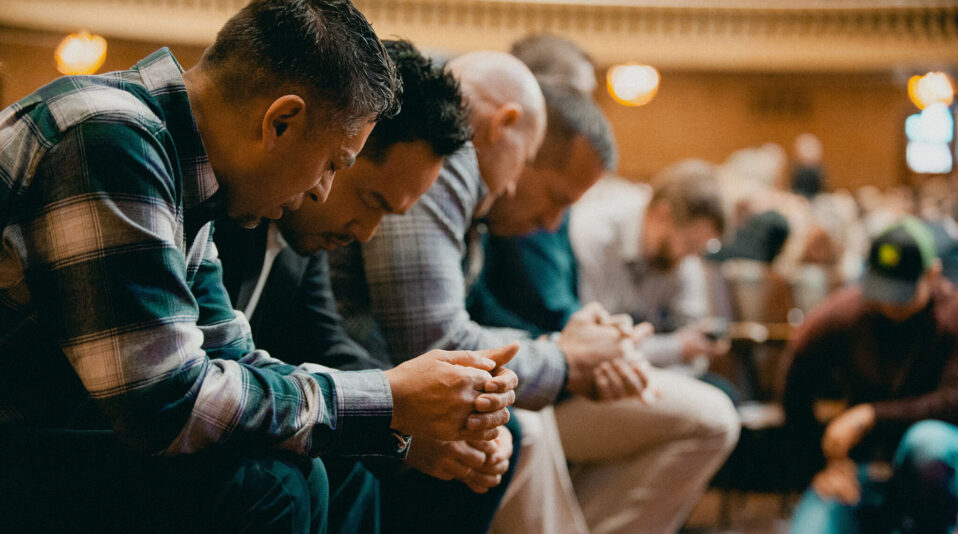
How to Grow Spiritually through Prayer

Gal 4:19
My little children, for whom I am again suffering birth pangs until Christ is completely and
permanently formed(molded) in you.
Can you imagine giving birth to a baby who for about 13 years post birth is unable to walk, talk or
join children of his age move or find meaning? If we can’t stand that, then we automatically violate
God’s agenda because children cannot handle certain ventures and vocations but those same people
can do exploits when they come of age
I am of the view that, it is every parent’s or creator’s intent to see that his kind are productive, this is
why God introduced prayer as a means of communication to exchange our weaknesses for his
strength, our sinful nature for his perfect nature to become a better version.
 
Ephesians 4:13
Till we all come in the unity of the faith and of the knowledge of the son of God, unto a perfect man,
unto the measure of the stature of the fullness of Christ.
 
Paul in his letter to the Ephesians brought to our notice that the standard for growth is the stature
and the fulness of Christ. For us to attain that stature, it was spelled out in Galatians that Christ can
be formed completely in a man if one takes the pain and travail or prayer for another or for one self
All spiritual blessings are in Christ already, therefore one must become like Christ to be able to utilize
the blessings since those blessing recognize the person and office of Christ, it is with this
understanding that through the instrumentality of faith we pray to access all the hidden treasures in
Christ.
 
Conclusion
Growth and maturity change the rules of the game, the same tree that gets no attention from any
one begins getting attention from even strangers. Spiritual growth cannot be overrated.
Read more

Growing up spiritually

Growth has a pattern and a blueprint, mostly not able to trace or fathom but its reality and its fruitfulness cannot be hidden. Life without growth and maturity will always lead to futility.

The creator places the tendencies and potentials in its creation to enable its creatures mature and growth to reflect that the creator is competent enough to reproduce his abilities because every creature is just a replica of its creation

Biological growth is the only growth that needs no special parameters and blueprints to happen, you just have to be alive to be experience biological growth and enlargement. Is the approach of biological growth the best way spiritual growth and maturity can find expression? Are there some specific requirements needed to be able to nurture growth and produce a finished product that has the credential of having attained a full stature?

1 Peter 2:2 You must crave pure spiritual milk so that you can grow into the fullness of your salvation. Cry out for this nourishment as a baby cry for milk (NLT)

As simple as milk is, it has essential fatty acids such as Omega 3, Calcium, Vitamins A and D which in effects enable maturation, vision and growth of the baby. The word of God has a portion that can be likened to milk and it is able to become a foundational food to fast truck maturation, good vision(perspectives) and the ability to be skillful to be able to discern right and wrong.


Spiritual growth is a conscious effort that can be attained if we consciously feed our selves in the word as children crave and cry for milk

Read more

CHILD CARE PROJECT PHASE 1 – GHANA

Date: 17th April 2023 TO 22nd April 2023

Background

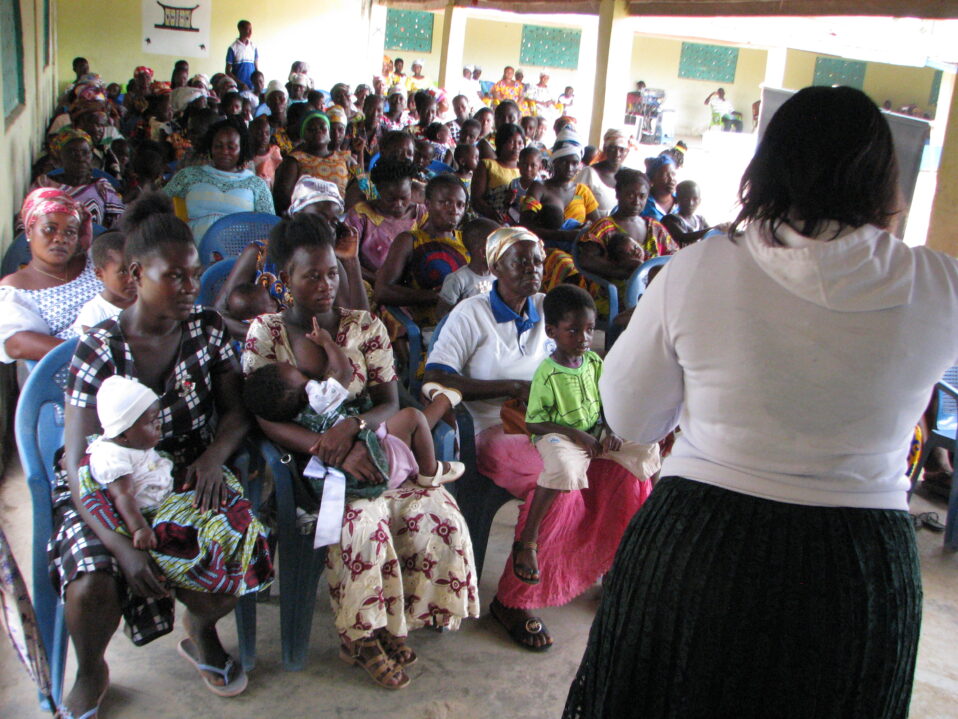
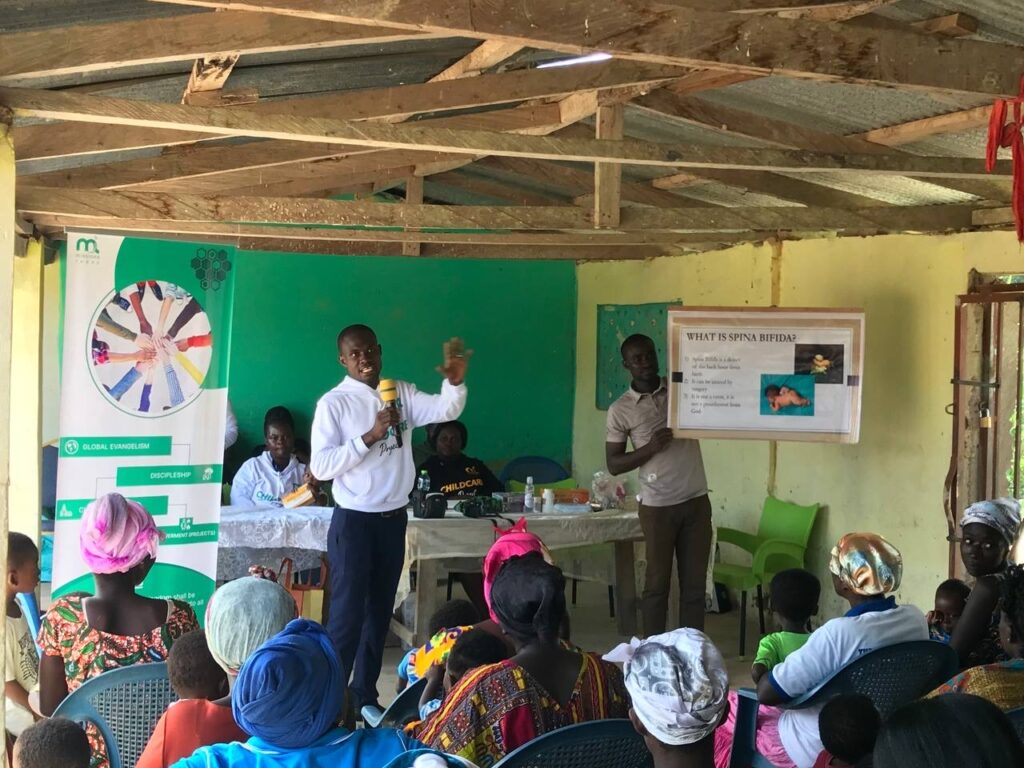
Presentation By Neuro Care Coordinator- (Education of community on Hydrocephalus and Spina Bifida as well as gospel presentation)

Aimed at reaching out to communities with the gospel of Christ and meeting the social needs of children and their families, The CURE Neuro Care Program-Kumasi partnered with a team of organizations to embark on the Child Care Project– initiated by the Christian NGO called Missions Today. The project took place over a period of 17th to 22nd April 2023 at Gyedua Asamang Near Bogoso in the western region of Ghana (serving as Epicenter and with peripheral townships. Key activities undertaken were Personal Evangelism, Open-Air Crusade, Health Screening, Health Education, and Food and clothing distribution to needy families. 

Key Organisations and Roles:

Partner Organization/Entity

Key Role

Missions Today

Funding and Project Planning, Gospel Presentation, Distribution of Meals and Clothing to Needy Patients

Graduates in Village Evangelism

The preaching of the gospel

The Church of Pentecost, Gedua Asamang District

Instrumentation and Preaching of the gospel

Ghana Health Service, Bogoso 

Health Screening

CURE Neuro Care Program-Kumasi, Ghana 

Health Education (Hydrocephalus and Spina bifida), Presentation of the Gospel

Activity and Outcomes

Activity

Beneficiaries Reached

Outcomes

Personal Evangelism

110 Persons

26 Souls

Outdoor Crusade

Over 660 participants

25 New Converts; 

38 Recommitments.

Dawn Megaphone Evangelism

About 450 persons

—-

Healings

12 persons

12 healings

Health Screening

121 children under 5

121 children Screened

Health Education

125 caregivers

125 caregivers were educated

Distribution of Food and Clothing

122 persons

122 persons

Holy Ghost Baptisms

12 persons 

12 persons

Water Baptisms

11 persons

11 persons


Read more

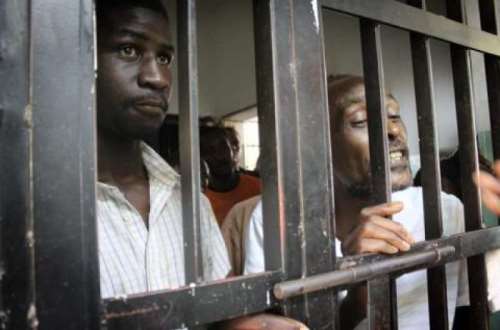
40 prisoners in Ghana freed as The Church of Pentecost pays their fines

The Church of Pentecost has paid the fines of 40 inmates convicted of various crimes and serving in some of Ghana’s prisons.

Chairman of the church’s Prison Ministry, Apostle ADP James Tetteh, made this known during a four-day Re-integration Conference held by the Church of Pentecost Prison Ministry at the Pentecost Convention Center a fortnight ago.
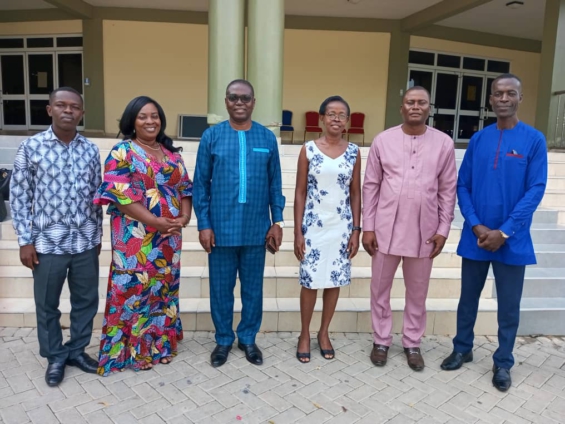
The freed prisoners attended the conference and shared their moments of joy with the participants at the conference. They joined in dancing and singing praises to God.

Explaining the church’s gesture, Apostle James Tetteh said the prison ministry is about sharing the word of God with the prisoners without neglecting their personal needs.

Speaking on the topic, “Doing an effective prison ministry”, he said the church has decided to intensify its efforts in the prisons because many prisons do not have chaplains while false religions and cults are reaching out to prisoners.

“We must therefore get there first,” he charged the participants.

The chairman of the prison ministry said the gospel offers prisoners God’s forgiveness of sins, and also gives inmates new values and perspectives in life. The gospel also offers coping mechanisms and strategies to deal with difficult situations and emotional instabilities.

To this end, he said the church aims to provide legal aid to prisoners and also support their welfare, reformation and rehabilitation.

The conference held from 5- 10 December 2022, also brought together professional counsellors and experts in reformation, rehabilitation, and reintegration who took the Prison Ministry Committee members and other Prison Ministry workers drawn from the various Areas of the church through sessions, so they can appreciate the dynamics involved in relating with prisoners.

The participants held a group discussion on “How to Improve The COP Prison Ministry For Maximum Impact” and “What is your understanding of the offender’s social reintegration process?”

All the ex-convicts went through personal counselling sessions led by Dr Charity Kuwornu.

Intensive prayer sessions were held with the ex-offenders. During the Holy Ghost session led by Ps. Supt. Moses Animah, all 29 of the released inmates present at PCC,  received the baptism in the Holy Spirit to the glory of God.

In an interview session with Pastor Supt. Moses Animah, the Secretary of the Prison Ministry Committee, he explained that the conference was done in pursuance of the (Vision 2023) agenda of the Church of Pentecost aimed at Possessing the Nation, by instilling godly principles in every sphere of society.

The inmates, though isolated from the larger society have not been left out.

The Church has been concerned about their transformation and has made so much investment in that regard.

He expressed appreciation to the Chairman of the Church of Pentecost and the leadership of the Church for the kind gesture as well as the continued love the Church has shown to inmates and the Ghana Prisons Service as a whole.

The Church has already completed of a  state of art two Camp Prisons at Ejura and Nsawam (Ejura and Nsawam Pentecost Reformation Centres) with two at various stages of completion to help reduce overcrowding in the prisons as well as assist in the inmate’s reformation, rehabilitation and reintegration process.

The Secretary of the committee said the conference has shaped the ex-convicts for a successful re-integration into the larger society.

Contacts were made with their families for them to be received with joy as they reunite with them.

Each of the former inmates received an undisclosed amount of financial support to start a business or enterprise as they begin their reintegration.

Apostle James Tetteh took the opportunity to introduce the members of the Prison Ministry Committee. They are

Aps. ADP James Tetteh – Chairman

Ps. Supt. Moses Animah – Secretary

Dns. Mrs Juliana Owusu – Member

Eld. James Nyann

Eld. Richard Amaning

Eld. Augustine Sarpong (PENSOS)

Eld. Kumah Isaac (PU) – Member

Dns Eunice Obeng

Read more

Why does the Wicked live long sometimes and the Righteous dies early?

Many of us wonder why is it that wicked and evil people are allowed to thrive, prosper and live long lives while the righteous and those who do what is good often die young. Although that appears to be an unjust thing, the reason why that happens will come as a surprise even to many Christians:

It’s because of the goodness of God.

‘The Goodness of God?’

Yes, the goodness of God. I used to wonder about this matter myself. I hear stories of wicked people, those who do wrong and deceive people into thinking that what they do is right, attaining prosperity. On the other hand, we hear stories of well-meaning people doing great things in service of God, yet they are often hungry.

The Bible even shows us stories of such injustice. We read about John the Baptist being beheaded at the command of a man in high position. We read about how Elijah was miraculously fed through ravens, angels, and a poor widow while fighting against the nation’s honoured deceiver, Jezebel.

And surely we have read about Jesus Christ, who was unjustly persecuted, ridiculed, betrayed and put to shame, at the urgings of respected religious leaders.

So how can we say that it’s because of the goodness of God? How could we call it “God’s goodness” that the wicked prosper while the godly die unjustly treated, poor, and young?

God’s Grace for the Wicked Is for Salvation

Friends, we must keep in mind that it is the Lord’s will for all men to be saved and come to a full knowledge of the truth (see 1 Timothy 2:4). It is with this desire that God allows such things to happen.

God allows wicked people to live long, in order that somehow someone will bring the gospel to them. 2 Peter 3:15 says, “Remember, our Lord’s patience gives people time to be saved.”

If God extends His patience for their salvation, we must hope, pray, and share the gospel to them for their salvation, too.

What About the Death of the Righteous?

Knowing that God extends His grace for the wicked to be saved, we must then understand that God wants the righteous to remain righteous until death. Because of His love, He protects His people from the evil that might befall them.

The righteous perishes, and no man takes it to heart; merciful men are taken away, while no one considers that the righteous is taken away from evil. He shall enter into peace; they shall rest in their beds, each one walking in his uprightness.” (Isaiah 57:1-2)

Some might misinterpret this as brutal, but it is actually merciful. Consider the pains of this world and its wickedness, and compare them to the beauty of God’s presence in heaven. Pretty sure our sleeping brothers in Christ are already happy with Him in His presence.

This, however, should not be a reason for us to want to die before our time. We must serve God in our generation before He calls us home (see Acts 13:36). Remember, Christ said “it is finished” before committing His spirit into God’s hands and breathing His last. (see John 19:30Luke 23:46)

Read more

“TikTok” as a means of reaching the Unreached with the Gospel. How?

Social Media has changed forever with the rise of TikTok, which is now officially the most opened and watched app in the social media ecosystem. It has become so successful that Meta, YouTube, and Twitter have altered the way they function in order to maintain their footing-and that’s a good thing for the gospel.

First, a bit of my experience as an evangelist on TikTok. When I jumped on in July 2021, I was skeptical—seeing the constant money grab and little return on investment on other social platforms over the years.

Immediately, however, I began to see results, real impact, and a loyal following of brand new believers hungry to devour God’s Word. As I write this, I’ve had over 50 million views, nearly 400,000 followers, nearly 4 million likes and most importantly, over 140,000 indications for a decision for Christ! Certainly, not all of these decisions are real or first time decisions, but even if that number is a sliver of the total, this has changed gospel communication for me forever!

Here are five things I’ve learned that can be applied to many, if not all, algorithm-based platforms for your ministry.

1. Metrics

The Algorithm only cares about one thing. Watch time that converts to followers. With the data I get from TikTok, I can objectively see when viewers scroll away, how many watch to the end, and with clear calls to action, I can see exactly how many are responding to the gospel in the comment section. Clear metrics are good for me but they are also really all the algorithm cares about, except, of course, obeying the terms of service (so don’t get banned for violations!).

Because I have a clear call to repentance and ask viewers to indicate their decision for Christ, I get comments like this every day, “I prayed the prayer and am shaking. I’ve never felt anything like this. I’m crying my eyes out.”

2. Consistency

The Algorithm wants consistency in messaging and content: I post 3-5 short videos a day, on a variety of things—mostly basic doctrines of sin, judgment, righteousness and addressing common struggles like pornography, anxiety, fears, family pressures and the like. The algorithm can depend on my account to provide fresh, engaging content on a specific niche (Christianity) and, in turn, it pushes my content to the ‘For You Page,’ or FYP.

Normally, over 80% of the views on my posts are not coming specifically from my followers but from views on people’s curated FYP’s. Here’s a recent comment: “You popped up on my FYP and now I’m following you everyday. You’ve changed my life and I’ve grown so much!”

3. Value

I have a very consistent following base I can push private content to and go deeper in discipleship with because I provide something unique in their lives—biblical teaching with an evangelistic edge. One follower recently wrote these words, “Before I found your account, I didn’t know anything about God. Now I am a Christian and am getting baptized!”

I wake up to comments like this literally EVERY SINGLE DAY and the main reason is I provide distinct value in the form of constant teaching. Out of the 280,000 followers, I estimate 8,000 users are engaging my content every day throughout the day.

4. Residual Returns

I’ve spent nearly 30 years traveling the world preaching Christ. Countless hours hoping when I got to the destination, there would be people to preach to, that there would be fruit. I’ll never give that up but there has not been a single day where I’ve not seen decisions for Christ on TikTok.

I wake up everyday to comments like this, “You don’t know me but I prayed to become a Christian months ago on your account. I want you to know that I have my first Bible and will be getting baptized next week.” That comment was posted on a video I had uploaded months before. The library of content continues to be viewed 24/7/365. Posts don’t die on TikTok, they live on. The delayed residual return on TikTok makes it unique from many other platforms.

5. Spiritual Power & Authority

Just like in-person preaching, gospel proclamation engages powers and principalities in digital spaces and requires the evangelist to rely on the Holy Spirit and focus on the authority of Scripture and the Gospel. This is one of the ways my account has prospered and suffered some persecution. There are real people on the other side of the screen and the enemy is at work in them and through them to thwart the gospel. Using the name of Jesus and stewarding the power of that name has proven time and time again to bear much fruit.

One commenter was dropping profanities into many posts and provoking Christians to anger. I made a post in response, calling on Jesus and the community to respond in love. Over the course of two weeks, this person repented and took first steps into the Christian community.

While I could teach a seminar on how the algorithm works and the tricks of the trade, none of that is nearly as important as the power of the Word of God-it is unstoppable. God is using TikTok in a powerful way to reach Gen Z with the gospel. Gen Z is NOT tuning into Christian radio or satellite TV, the eyes and ears right now are undoubtedly on TikTok and so this is where we bring the unction of the Spirit of the Living God. We may not be able to pray in schools, but every single day I get to speak 6-12 inches away from the eyes a 14 year old sitting in the back seat of his mother’s SUV after school and tell him that Jesus loves him and that he can be born again through repentance and faith. There is no greater honor or joy for an evangelist!

Read more

Striker Olivier Giroud declares his faith in Christ publicly whiles leading the France to the World Cup Finals: “The Lord is my Shepherd”

Soccer fans around the world know Olivier Giroud for the amazing talent he displays on the pitch. But the French striker’s bold display of his Christian faith off the field is garnering attention too. 

Giroud has played an essential role in the 2022 World Cup, contributing to French victories with his powerful goal-scoring ability. He now holds the record for most goals scored in the history of the French men’s national team. 

While Giroud has been considered one of the most underrated strikers in the world, this year he’s gotten plenty of accolades for helping his team advance to the FIFA World Cup Final where they will play against Argentina led by Lionel Messi on Dec. 18.

But the 36-year-old Frenchman is also a striker for the Lord. Throughout his 12-year soccer career, he has remained outspoken about his faith in Jesus Christ. 

Giroud also sports a daily reminder about his deep Christian faith. Tattooed on his right arm is the famous Bible verse found in Psalms 23: “Dominus regit me et nihil mihi deerit” which translated says “The Lord is my Shepherd, I shall not want,” according to The Mail

The soccer forward also told the outlet that every time he scores a goal, he has turned it into a celebration of faith by pointing to the sky to give God the glory. 

“I’m very religious so, at that moment, I just thanked God. I was very grateful to have the opportunity to live my dream. To live every single day for me is a day blessed,” he told The Mail

Fans can expect to see him perform that same ritual during the game with Argentina on Sunday morning as Giroud and the French men’s team go for their second World Cup title in four years. 

Read more

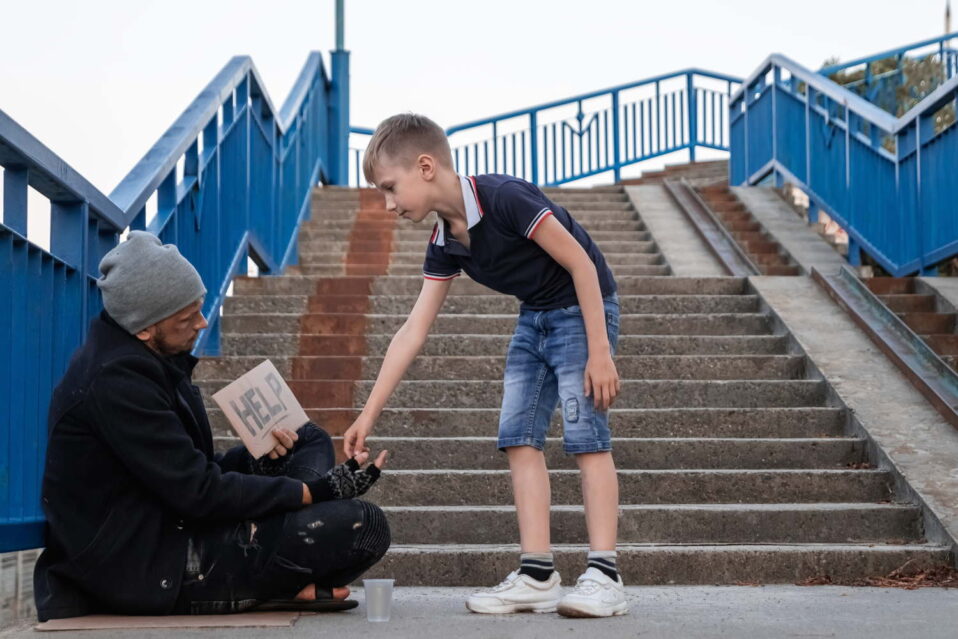
Ministering to the Needy and the Vulnerable in the Society can lead many to Christ

One of the greatest commands of Christ to believers is to show compassion to the needy and disadvantaged because that represents the heart of God to the world. God is the ultimate provider who provided for mankind’s deepest need which is the need for a Saviour. Whilst the world was lost in sin, Jesus Christ gave His life for the world so that through His death and resurrection, we might also have access to eternal life.  (John 3:16)

In the same way that God provided for our deepest need, God also expects us to provide for the needs of the poor and disadvantaged. Indeed to fast and pray without showing compassion and care for the needy is mere religion which is unacceptable in the sight of God.- “Is this not the fast that I have chosen: To loose the bonds of wickedness, To undo the heavy burdens, To let the oppressed go free, And that you break every yoke? Is it not to share your bread with the hungry, And that you bring to your house the poor who are cast out; When you see the naked, that you cover him, And not hide yourself from your own flesh? Then your light shall break forth like the morning, Your healing shall spring forth speedily, And your righteousness shall go before you; The glory of the Lord shall be your rear guard. Then you shall call, and the Lord will answer; You shall cry, and He will say, ‘Here I am.’ “If you take away the yoke from your midst, The pointing of the finger, and speaking  wickedness, If you extend your soul to the hungry And satisfy the afflicted soul, Then your light shall dawn in the darkness, And your darkness shall be as the noonday. The Lord will guide you continually, And satisfy your soul in drought, And strengthen your bones; You shall be like a watered garden, And like a spring of water, whose waters do not fail. (Isa 58:6-11 NKJV)


It sometimes seems that believers and missionaries in general neglect this aspect of ministry. Usually, the focus becomes the preaching of the word and prayer to the neglect of showing care to the vulnerable in the society or the people we are called to serve. Remember that giving to the needy is a form of preaching love to the unsaved.  Read what the Apostle James said; If a brother or sister is without clothing and in need of daily food, and one of you says to them, “Go in peace, be warmed and be filled,” and yet you do not give them what is necessary for their body, what use is that? (James 2:15-16)


Providing for the needy is an urgent ministry in these times when the world is filled with so much greed and wickedness. Believers must rise and answer this urgent call to minister to the needy and disadvantaged persons by engaging with their communities to identify these needs. There are many ways of providing for the needy and disadvantaged in society. These include

  • Defending the right of the poor to justice- Psalm 82:3, Prov 31:8-9, Isaiah 1:17,
  • Providing for their physical needs such as the right to shelter, food, clothes and medicine-Mark 8:2
  • Providing them with compassion, love and care- Matt 9:36
  • Providing education to the community to empower them in knowledge and in skills.

Providing for the needy and disadvantaged attracts great rewards from God. God assures us that those who give will always be blessed and God will be a light unto them. – Then your light shall break forth like the morning, Your healing shall spring forth speedily, And your righteousness shall go before you; The glory of the Lord shall be your rear guard. Then you shall call, and the Lord will answer; You shall cry, and He will say, ‘Here I am.’ (Isa 58:8-9 NKJV). Interestingly, we find this great assurance embedded in God’s command to us to provide for the needy in Isa 58:6-11. This shows how much God values our ministry to the needy and less fortunate in society.

Beloved in the Lord, we must fulfil our ministry to the needy with all humility and with a heart which seeks to glorify God.  God will certainly reward us for our labour of love-And whatever you do, do it heartily, as to the Lord and not to men, knowing that from the Lord you will receive the reward of the inheritance; for you serve the Lord Christ. ( Col 3:23-24 NKJV). Therefore we must not seek a reward or praise from man or else we will miss the true blessings of our heavenly father.

May the Lord provide us with wisdom to identify the true needs of the people so that our ministry to the needy will make a resounding impact.

Read more

Missions Group plead for prayer for a Missionary Pilot jailed in Mozambique

It’s been more than a month since an American missionary pilot has been detained by Mozambique police on allegations of supporting insurgents in the country. Now his family, friends, and the Mission Aviation Fellowship (MAF) are asking Christians around the world to pray for “his safety and swift release.”

Pilot Ryan Koher, 31, was taken into custody by officials in Mozambique while preparing to fly vitamins and other supplies to church-run orphanages in the Cabo Delgado Province. During airport security scans, officials took interest in over-the-counter medications and food preservative supplies that belong to Ambassador Aviation Ltd. (AAL), which is a partner of U.S.-based non-profit MAF, the group reported.

Koher was detained on November 4, along with two South Africans volunteers, on suspicion that their flight was in support of insurgent activity.

He is currently being held in a high-security Mozambique prison, KTVB-TV reports.

“Ryan Koher did nothing wrong,” said MAF President and CEO David Holsten. “His wife and children deserve to have him back home in time for Christmas, and the organization that serves the orphans in northern Mozambique needs the supplies he was trying to deliver when he was wrongly detained.”

“I urge Christians around the world to pray for Ryan’s safety and swift release, and call on those in power both in Mozambique and here in the U.S. to do everything they can to resolve this wrongful detainment,” he added. 


As CBN News has reported, Islamic extremists in the country have killed Christians, raided house churches, burned homes, and displaced hundreds of people. Since 2017, more than 6,300 people have been killed and nearly 1 million displaced, the Global Centre for the Responsibility to Protect reports.

Meanwhile, Koher’s wife, Annabel, can only communicate with him through letters. 

“It seems like it was connected to the location of the flight. It was going up the north where there are insurgents right now there. There have been attacks, but we have been doing work to help the victims of those attacks,” she told KTVB-TV. “We’re not exactly sure where the miscommunication was or the misunderstanding.”

The family moved to Mozambique last December in support of Koher’s work with MAF but had to later relocate to the United States because of security protocols.

However, Ryan continued his work with the mission. 

“Ryan is a caring and gentle individual,” Holsten added. “Over the last couple of years, he and his wife have worked hard to learn the language and culture of Mozambique to better serve those who rely on our service.”

He added, “Understandably, this situation has been very challenging for the family. We fully believe in Ryan’s innocence, and we are all praying that this issue will be resolved very soon with the charges dismissed and Ryan released.”

MAF officials say Koher’s situation is unusual.

“We haven’t seen it at all, and honestly, just detainment like this, it’s a surprise to us,” MAF Chief People Officer Ruth Harrison said. “[The locals] are as puzzled as we are on this, ’cause it doesn’t make sense. It is out of character.” 

“Ryan is a gentle giant,” she added. “We know Ryan is innocent. There is really no reason for him to be held at this point.”

Source: CBN NEWS

Read more

The surprising surge of Christianity in the Middle East

As millions of Christians flee the Middle East and Christianity’s original homeland becomes increasingly bereft of Christians, an odd anomaly is occurring.

Christianity in the Gulf states is surging. Amid a shocking exodus in neighbouring countries, this strictly Islamic region has seen a jump in its Christian population.

Figures show that in both Saudi Arabia and the United Arab Emirates, Christianity was practically non existent just over a hundred years ago. There were only 80 Christians in the UAE in 1910 (0.1 per cent of the population) and 50 in Saudi Arabia, even less than 0.1 per cent, according to a recent study.

However one hundred years later in 2010, Christianity had exploded to 12.6 per cent of UAE’s population and 4.4 per cent of Saudi Arabia’s. Between the two countries alone there are now well over one million Christians. While by no means a majority, this represents a a significant growth in such a conservative Islamic region.

Indeed, this surge is not limited to Saudi Arabia and the UAE. Throughout the Gulf, countries such as Bahrain, Kuwait, Oman and Qatar have all seen dramatic increases to their Christian populations.

This growth is even more extraordinary when compared to the mass exodus of Christians from neighbouring Middle Eastern countries. Lebanon, for example, used to be a Christian-majority country with 77.5 per cent of the population identifying as Christian in 1910. Now that figure stands at 30.4 per cent. But even that is healthy compared to Turkey and Syria where Christianity has plummeted from 21.7 per cent and 15.6 per cent respectively to just 0.2 per cent and 2.7 per cent.

But Christianity’s growth in the Gulf is not down to a revival. Converting from Islam to Christianity is

punishable by death in both countries and evangelism is prohibited. In Saudi Arabia any public observance of non-Muslim faiths is illegal and Saudi Christians are forced to worship in private.

While persecution charity Open Doors has highlighted “many reports” of Muslim conversions, the reality is that the vast majority of the Gulf’s new Christians are immigrants. Since 1910, the region has become extraordinarily wealthy. This has brought unprecedented immigration to the extent that in UAE, Christians now number little over 10 per cent of the population.

A high proportion of these immigrants come from heavily Christian countries such as the Philippines. The majority of these are Roman Catholic workers, replacing the original Christian population which were largely Orthodox.

However despite the dramatic increase, it is likely there will be little change to religious tolerance in the region. Hardly any of the new Christians immigrants are citizens and many are low-skilled workers, meaning that their stay is likely to be temporary. Most of the Gulf’s population is highly transient and the Christians are unlikely to be different.

As a result, although the numbers of Christians are significant, they are unlikely to make any political difference. Wahhabism, a strict interpretation of Islam, still dominates Saudi Arabia in particular and even in the relatively liberal UAE, Christian converts face severe persecution and no religious education other than the teaching of Islam is permitted.

The future is therefore uncertain for Christians in the Gulf. But as Christianity loses its most ancient communities in the Middle East, the arrival of Catholics in Islam’s most conservative heartland may be a source of hope to those praying for a revival in the Middle East.

Read more