

Do Christians really give to support Missionaries among the unreached groups? Shocking Stats

As a cross-cultural missionary focused on the 10/40 Window—the final frontier of missions efforts—I am always thinking about the misallocation of Christian giving. I say “misallocation” because the numbers are completely lopsided.

Here are a few numbers to think about:

  • “Christians make up 33% of the world’s population, but receive 53% of the world’s annual income and spend 98% of it on themselves.” – Barrett and Johnson, 2001, 656
  • “North American and European Christians spend $12.5 trillion on themselves and their families each year.” – Barrett and Johnson, 2001, 656
  • “Only 0.1% of all Christian giving is directed toward mission efforts in the 38 most unevangelized countries in the world.” – Barrett and Johnson, 2001, 656
  • “American Christians spend 95% of offerings on home-based ministry, 4.5% on cross-cultural efforts in already reached people groups, and .5% to reach the unreached.” – The Traveling Team
  • “Christians’ annual income is $12.3 trillion. $213 billion is given to Christian causes. $11.4 billion is given to foreign missions, 87% of which goes to work being done among the already Christian, 12% goes to work among the evangelized non-Christians, 1% among the unevangelized.” – The Traveling Team

 

Do we really care about those missionaries?

I have spent a lot of time in some of the poorest of Asia’s villages over the last decade and a half with Within Reach Global. I have shared life and the gospel message in the huts and homes of people who have never heard the name of Jesus before.

It burns in my heart to see these communities reached with the love of Jesus, but apparently, bringing the hope of the Christian gospel to these people is simply not a major priority for Christians worldwide.

Foreign and indigenous missionaries in the unreached and unengaged world are being hung out to dry as they try to reach the people groups in the 10/40 Window. If they were fully funded, there is a great chance that we could finish the task of reaching the world for Jesus.

“In AD 100 there were 12 unreached people groups for every congregation of believers. Now there is 1 unreached people group for every 1000 congregations.” – Ralph Winter

But only a tiny percentage of Christian giving goes to reach the least reached people of the globe.


We tip our waitress 15% but we can’t even give God 10%?

On average, American church members give just 2.58% of their income with 25% giving nothing at all. Discovering for the first time that Christians are not giving at the level you may have thought can be depressing, but even at 2.58% it still adds up to over $103 billion given to American churches each year.

$103 billion dollars every single year is an incredible amount. It’s enough for the American church alone to eliminate the most extreme poverty in the world by many estimates.

So how is the money being spent? Here are the stats according to Empty Tomb, Inc.:

85% goes to Internal Operations:

  • 50% to pay the salary of pastors and church staff.
  • 22% to pay for upkeep and expansion of buildings.
  • 13% for church expenses such as electricity and supplies.

15% goes to Outreach:

  • 13% local ministry.
  • 2% for overseas missions (both evangelistic and charitable).

“The Lord did not tell us to build beautiful churches, but to evangelize the world.” – Oswald J. Smith

In the end, if you only give to your local church, odds are that only 2% of 2.58%, or 0.05% of your income is going towards “preaching the gospel to every nation” and helping the “poorest of the poor” combined.

To put that in perspective, if you make $50,000 a year, that is only $25.80 per year that goes toward missions work—that is, IF you give toward Great Commission efforts among the unreached.

Of course, all of this depends on what church you attend and how much you give, but it’s a sobering statistic for sure. – Believers Resource

 

The epic fail of Church embezzlement.

And if the statistics of Christian giving do not impassion us already, compound the disaster with the epic fail of Church embezzlement:

  • “Emboldened by lax procedures, trusted church treasurers are embezzling $16 billion every year out of church funds, but only 5% ever get found out.”
  • “Annual church embezzlements by top custodians exceed the entire cost of all foreign missions worldwide.” – World Evangelization Research Center
  • “Christians spend more on the annual audits of their churches and agencies ($810 million) than on all their workers in the non-Christian world.” – World Evangelization Research Center
  • “Christians worldwide will commit more than $37 billion in church-related financial fraud during 2013. Compare that to the $33 billion churches are expected to spend on worldwide mission work this year.” – Center for the Study of Global Christianity

That may be a lot to swallow. Do you find it as incredulous as I do?

money03

Partner with God to reach unreached people groups.

My question is this: Are we as believers truly interested in finishing the task of reaching the world for Christ, thus ushering in the end of the age? Do we truly want to partner with God in reaching every “people, tongue, tribe and nation” with the gospel to speed the return of Jesus as the blueprint of Matthew 24:14 describes?

Want to reach unreached people groups around the world? Connect with us

Source: Within Reach Global

Read more

Should Pastors plagiarize messages on the pulpit?

Someone brought something to my attention recently. A young woman on our staff came across a talk, given by a pastor, on a church’s website. It was a clear case of pastoral plagiarism.

It was my talk.

He had delivered it, largely verbatim, from a manuscript purchased on the ChurchandCulture.org website. There was no verbal attribution ever given. Perhaps most egregious was his telling of my personal vignettes as if they were his own.

She dug into a few more, and found almost every talk for the last two-and-a-half years had been one of my talks.

I called him on the phone, and we talked about it. To his credit, he wasn’t defensive but repentant.

Then it happened again this week. Someone stumbled onto a talk on a church’s website, and it was one of my talks.

Again, almost completely verbatim.

This is serious.

pastor of a large church in our city lost his job when one of the members of the church heard a talk on the radio by a well-known radio preacher. The pastor had given the same talk earlier that week in the church, without attribution. The member told an elder, the elder looked into the matter and discovered a pattern of plagiarism.

What are the “rules” of pastoral

plagiarism for communicators?

I’m not sure we know because they aren’t as spelled out as they are in the academic world. But I think we can—or at least should—agree to the following 10 commandments:

The Do’s and Don’ts of Pastoral Plagiarism

  1. Do take inspiration from another person’s talks.
  2. Do allow yourself to be informed by another person’s research.
  3. Do feel free to quote another person, tell their story, use their outline and repeat memorable phrases with attribution.
  4. Do buy mp3s and manuscripts of speakers to grow as a communicator as you listen to their style and structure.
  5. Do borrow ideas for series from other speakers and churches.

But…

  1. Don’t ever use another person’s creative outline without attribution.
  2. Don’t ever use another person’s unique insights without attribution.
  3. Don’t ever use another person’s stories without attribution, and never, ever go even farther and tell it is as if it happened to you.
  4. Don’t justify plagiarism by trying to spiritualize it with “It’s all for the Kingdom” or “It’s not really theirs, because God gave it to them” kind of statements. That is true of everything, such as our property, yet God says, “Don’t steal.” That includes intellectual property, too.
  5. Don’t let the abundance of online resources keep you from doing spadework on the Scriptures, exertion on the exegesis and prayer for the pulpit that makes for anointed talks.

In truth, there is little excuse for plagiarism. It’s so easy to give attribution in a flowing, natural way.

If you have listened to many of my talks, you know how common it is for me to start off a talk or series by saying, “My thinking has been informed on this by…” or “I’m indebted throughout today’s talk to…”

I’ve started many a sentence with, “Philip Yancey tells the story of…” “John Ortberg writes about this in a funny way…” “Andy Stanley talks about this in terms of…” or “C.S. Lewis once observed that…”

The point is that good communicators borrow material all the time.

But ethical ones let you know where they borrowed it.

Source: Churchleaders.com

Read more

Do you know that 16 Christians are murdered for following Jesus – everyday?

Around the world, 16 Christians are killed each day, on average. That’s nearly 500 Christians every month. Men, women, fathers, mothers, sons and daughters. Just because they follow Jesus. What staggering and sobering statistics.

Our research for the 2022 Open Doors’ 2022 World Watch List—the most in-depth investigative report focusing on global Christian persecution available—reveals that from October 2020 to September 2021, the number of Christians abducted, arrested and killed increased sharply.

This year, the total number of martyrs increased from 4,761 (2021 World Watch List (WWL)) to 5,898 (WWL 2022). Keep in mind this number is likely to be much lower than actual reality because, especially in closed countries like North Korea and Afghanistan, or conflict-ridden places like Somalia and Nigeria, killings are often done in secret and/or go unreported. No one in a North Korean prison camp or radical military leader in Nigeria is reporting the murder of a Christian. Yet Open Doors has talked to thousands of believers and refugees and Christians are dying for their faith—every day.

Many Christians die because of their increased vulnerability in conflict, long-term deprivation of necessities and/or exclusion from socioeconomic aid.

Across the top 50 countries on the World Watch List, pressure is mounting. In 2022, all 50 countries registered a “very high” level of persecution for the second year in a row.

In fact, more than 360 million Christians suffer high levels of persecution and discrimination for their faith. That’s an increase of 15 million believers in only one year.

During the 2022 World Watch List reporting period (from October 2020 to September 2021):

  • 5,110 Churches or Christian buildings were attacked
  • 4,765 Christians were unjustly arrested, detained or imprisoned
  • 3,829 Christians were abducted for faith-related reasons.

That means each day, 14 congregations were attacked, 10 Christians faced the nightmare of kidnapping, and 13 Christians went through the trauma of unjust arrest, detainment and/or imprisonment.

Not only that, persecution against Christians has risen for 16 consecutive years.

Violence against Christians continues to spread in Africa

In many countries, the violence against believers is “subtle.” For instance, in India—once again No. 10 on the World Watch List—Open Doors partners have found that Christians are beaten, injured or chased away from their homes. But the reported number of Christian killings is limited. This number is likely higher and happens out of the public eye, impossible to verify.

But in Africa, the violence is extreme and public. Out of the top 10 most violent countries against Christians, seven are in Africa. The most violent of these countries is—once again—Nigeria, where 4,650 believers were killed this past year alone. That’s an average of nearly 13 Christians each day, meaning Nigeria accounts for nearly 80% of Christian deaths worldwide.

Christians are attacked indiscriminately and brutally in northern Nigeria, and the violence has continued unabated—one of the only places in the world where COVID-19 travel restrictions and lockdowns had little impact on attacks against Christians.

The attacks have also spread to southern Nigeria. Fulani militants and other violent actors have settled into southern forests, making it difficult for Christian farmers to access their land.

Increasingly in the South, the situation for Christian women and girls continues to be dire. Raids by Islamic extremist groups Boko Haram and Islamic State West Africa Province (ISWAP), Fulani militants and armed bandits have terrorized Christian communities. Women and girls have been raped, forced into sexual slavery, kidnapped for ransom and killed.

Christian men and boys are often specifically targeted and killed in attacks. Much of this violence takes place in Christian communities in rural areas and at roadblocks. Survivors of these attacks often face abduction and forced recruitment in militant ranks. Young boys risk being recruited as child soldiers, and there are reports of church leaders and church members being regularly abducted for ransom.

Pastor Jeremiah, whose church and village in northern Nigeria was attacked by Fulani militants, said: “We have cried to the government to intervene, but they have done nothing. We still pray for [the Fulani militants] to change their ways because some of them were forced into [attacking], while others had hardened their hearts to do this evil, but nothing is difficult for God.”

But it’s not just Nigeria. Sub-Saharan Africa continues to be the most violent place in the world for Christians, and the problem is only growing.

Fleeing violence because no place is safe

Though the 2022 World Watch List saw a slight decrease in violent attacks against Christians in Somalia, persecution remains extreme in the third most dangerous country for Christians. No place is safe (even the home) for a Christian, and pressure in every area of life is intense and unending.

Young female converts to Christianity remain one of the most vulnerable populations in Somalia. It is common for a Somali woman suspected of Christianity to be raped and humiliated in public, kept under strict house arrest, abducted, forcibly married to a radical Islamic sheikh or even killed. If she’s already married, she will likely be divorced and have her children taken away.

Somalia is a patriarchal society with high social control. Somali men and boys merely suspected of conversion to Christianity face extreme violations of their fundamental rights. They are at risk of being verbally abused, physically assaulted, losing their businesses, imprisoned, heavily threatened, tortured, abducted or being killed in abhorrent ways.

Similarly, Eritrea remains sixth on the World Watch List, making it still one of the hardest places in the world to follow Jesus.

Female converts from Islam can face abduction, house arrest, forced marriage, divorce or separation from their children. Whereas in many countries women are exempt from military service, in Eritrea, women are also subjected to obligatory military training and national service. Female conscripts are vulnerable to various forms of gender-based violence, including from prisoner guards and commanders. Many choose to flee the country in order to evade such a fate.

Since most underground church leadership positions are held by men, any arrests among them cause a leadership vacuum, as well as financial distress to families where they are the breadwinner. The impact extends to schools, where the children of pastors can be taunted and branded a “Pente,” a label which is considered shameful and can put the victim in danger.

Violence continued to rise in the Democratic Republic of the CongoBurkina FasoMozambique and Cameroon, where Christians are targeted by violent Islamic militants. In sub-Saharan Africa, Christians are constantly in danger, and the problem is only growing.

They desperately need our prayers.

top photo: IMB.org

Read more

A Missionary in Nepal Sentenced to Two Years in Prison for Violating Anti-Conversion Law

11/30/2021 Washington D.C. (International Christian Concern) – International Christian Concern (ICC) has learned that a Christian pastor in Nepal has been convicted of violating the country’s harsh anti-conversion law. The pastor has been sentenced to two years in prison and a fine of 20,000 Rupees (about $165).

On November 30, Pastor Keshav Acharya was sentenced to two years imprisonment by the District Court in Dolpa for violating Nepal’s anti-conversion law. Pastor Acharya was first arrested on March 23, 2020, on charges of spreading false information regarding the COVID-19 virus.

In a viral video published on the internet, Pastor Acharya prayed in front of his congregation, saying, “Hey, corona – you go and die. May all your deeds be destroyed by the power of the Lord Jesus. I rebuke you, corona, in the name of Lord Jesus Christ. By the power or the ruler of this Creation, I rebuke you… By the power in the name of Lord Jesus Christ, corona, go away and die.

On April 19, 2020, Pastor Acharya was released on bail, but was immediately rearrested outside of the court without a warrant. He was then sent to the Dolpa District Police where he was charged with proselytizing and distributing Christian tracts in Dolpa.

The District Court in Dolpa convicted Pastor Acharya of violating Nepal’s anti-conversion laws on November 22. Pastor Archaya’s final hearing, however, was held on November 30 where he was sentenced to two years imprisonment and a fine of 20,000 Rupees.

Proselytization is considered a criminal offense in Nepal. The process of criminalizing religious conversion began in 2015 when Nepal adopted a new constitution. Under Article 26 (3) of the new constitution, “No person shall behave, act or make others act to disturb public law and order situation or convert a person of one religion to another or disturb the religion of other people…such an act shall be punished by law.

In August 2018, the Nepalese government enacted this controversial portion of the new constitution when it was added to the country’s criminal codes. Under these new laws, an individual found guilty of even encouraging religious conversions can be fined up to 50,000 Rupees and placed in prison for up to five years.

William Stark, ICC’s Regional Manager for South Asia, said, “We here at International Christian Concern are deeply concerned by the conviction of Pastor Acharya. For more than a year, authorities in the Dopla District have seemed bent on convicting Pastor Acharya of something and punishing him for simply being a Christian pastor. Since the new constitution was adopted in 2015, Nepalese Christians have been concerned that Article 26 and its enacting laws would be used to target their community. Today, Nepalese Christians again have seen their fears realized. Nepal’s sweeping anti-conversion law must be repealed if religious freedom is truly a right to be enjoyed by the country’s citizens.

Read more

The 10 most dangerous nations for Christian Missionaries

In 2021, even during the ongoing COVID-19 health crisis, persecution against Christians continued at an alarming rate around the globe. Research for the Open Doors’ 2022 World Watch List—the most in-depth investigative research and report on Christian persecution available—shows that today, more than 360 million people face high levels of persecution and discrimination for their faith. That’s an increase of 15 million believers in only one year.

That’s one in 7 Christians, worldwide.

Download the 2022 World Watch List here.

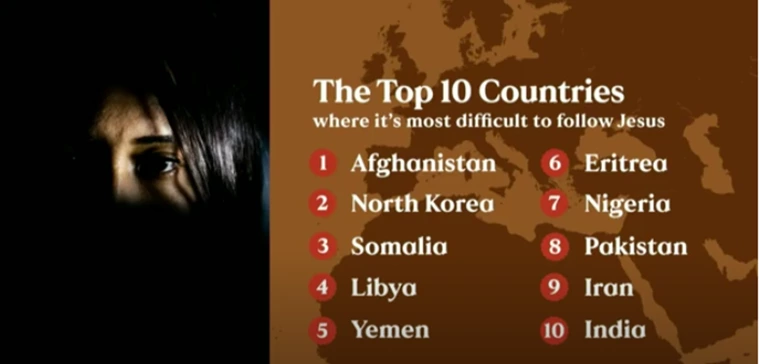
Below, we look at the top 10 countries where persecution is highest. In many of these countries, life is already difficult, but making the decision to follow Jesus and live as a Christian is a choice that puts one’s life, family and livelihood in jeopardy. In countries like Afghanistan, North Korea and Somalia, faith in Jesus can be a death sentence. And in 2021, we saw a spike in violence, new technologies that threaten the faith of millions—and a new No. 1 for the first time in 20 years.

1. Afghanistan: No. 1 for the first time

As an Islamic state by constitution, the country does not permit any faith other than Islam to exist. Simply put—it is illegal to convert. Converting to a faith outside Islam is equal to treason; it’s seen as a betrayal of family, tribe, and country.

It is impossible to live openly as a Christian in Afghanistan. If a Christian’s new faith is discovered, their family, clan or tribe feels they must save their own honor by disowning the believer, or even killing them; this is widely considered justice. Alternatively, since leaving Islam is considered a sign of insanity, a Christian who has converted from Islam may be forcibly admitted to a psychiatric hospital.

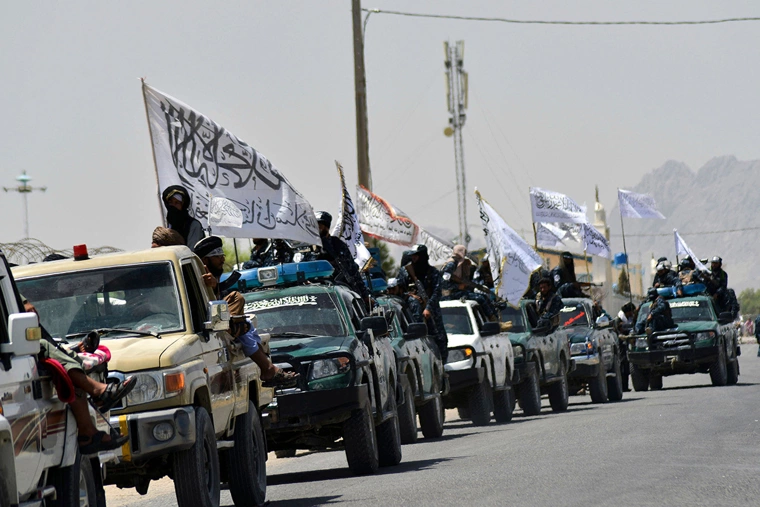
Christian persecution remains extreme in all spheres of public and private life. The risk of discovery has increased since the Taliban controls every aspect of government. This extends to owning documentation—including paperwork from international troops—that may help identify Christians.

However, through it all, faith of Afghan believers continues to deepen as they put their hope solely in Christ. One Christian said, “We will never let that hope be silenced.”

2. North Korea: Not No. 1, but no better than last year

North Korea has been at (or near) the top of the World Watch List for more than 20 years; any North Korean caught following Jesus is at immediate risk of imprisonment, brutal torture, and/or death. An estimated 50,000 to 70,000 Christians are imprisoned in North Korea’s notorious system of prison and labor camps. To make matters worse, often a family will sometimes share the same fate as the person captured.

The government (ruled by the Kim family) views Christians as the most dangerous political class of people, so the persecution is violent and intense. North Korean parents often hide their faith from their children, churches of more than a few people are non-existent, and most worship is done as secretly as possible. Life for Christians in North Korea is a constant cauldron of pressure; capture or death is only a mistake away.

Where believers are known to authorities for past “crimes,” like possessing a Bible, they are seen as the lowest rung of society and neglected for whatever meager food aid is available. North Korea continues to be extremely dangerous for followers of Jesus, and it’s not likely to change until the Kim regime is toppled.

3. Somalia: Harassment, intimidation and murder

For more than 25 years, Somalia has been a haven for Islamic militants who constantly target Christians, both in Somalia and in neighboring countries. Groups like al-Shabab operate with seemingly little pushback and control large parts of Somali territory. The small number of believers in Somalia are largely Christians who have converted from Islam. Christians are viewed as high-value targets by al-Shabab.

Even when Christian converts are not targeted by Islamic extremists, they are intensely pressured by their family. Any conversion from Islam is seen as a betrayal to family and community, so just suspicion of conversion can lead to harassment, intimidation, and even murder. Despite the ongoing COVID-19 crisis, al-Shabab continued to be active in 2021, a reminder that life for Christians in Somalia is never safe.

While no part of Somalia is safe, the areas under control of al-Shabab are the most dangerous for Christians. But all Christians who have converted from Islam are in grave danger—from their family, their community and society at large.

4. Libya: Secret lives of faith

When a person in Libya leaves Islam to follow Christ, they face immense pressure from their families to renounce their faith. Their neighbors and the rest of the community ostracizes them, and they can be left homeless, jobless, and alone. If a Libyan Christian shares his or her faith with someone else, they will likely be reported, arrested and perhaps face violent punishment.

The country has no central government, so laws are not enforced uniformly, leaving Christians in danger of overt and public persecution. Targeted kidnappings and executions are always a possibility for believers. The only way to be a safe Christian in Libya is to live a secret life of faith.

Christians are vulnerable throughout Libya, whether they live in the country, are passing through for migrant work, or are trying to reach Europe to start a new life. Extremist groups have established checkpoints and control specific areas of the country. Christians who move from area to area, looking for work, are just as likely to end up in one of the country’s overcrowded detention centers as they are to find jobs. In some cases, Christians who are apprehended are delivered to criminal officials or human trafficking groups, where they are forced into heavy labor or pushed into prostitution.

Although persecution is enormous, and being a Christian is incredibly dangerous, believers continue to meet, share the gospel and grow in their faith. As one man said, “Jesus is like oxygen, because without oxygen you cannot breathe.”

5. Yemen: Severe punishment for conversion

Yemeni Christians are mostly converts from Islam who must live out their faith in secret because conversion from Islam to Christianity is forbidden, both in Islam and Yemeni law. Christian converts are pressured by both the government and from their communities to recant their faith in Jesus; they might be arrested/interrogated for their faith, and face threats from both family and Islamic extremists who threaten apostates with death.

Yemeni culture is extremely tribal, and often the tribal punishment for denouncing Islam can be death or banishment. Both male and female converts to Christianity who are married to Muslims risk divorce and may lose custody of their children. Yemen is home to one of the greatest humanitarian crises in the world, but Yemeni Christians are additionally vulnerable since emergency relief is mostly distributed through local Muslim leaders and mosques. These groups have been accused of discriminating against anyone who is not considered to be a devout Muslim.

Life is dangerous for all Christians in Yemen, and some believers in certain areas are at particular risk, such as Christians living in the south, where there is a strong al-Qaeda presence. Converts from Islam to Christianity have also indicated that there is more pressure in the Shiite Muslim-controlled areas in the west than in areas under control of the Sunni government. The Shiite-controlled areas (which comprise approximately one-third of Yemen’s territory) are heavily policed; any dissenting opinion is rigorously repressed and likely to lead to imprisonment, torture, and possibly worse.

6. Eritrea: ‘Africa’s North Korea’

Despite almost half the population identifying as Christian, believers in Eritrea continue to suffer extreme persecution, making it still one of the hardest places in the world to follow Jesus.

The government recognizes only three Christian denominations: Orthodox, Catholic and Lutheran. Those not part of these groups are at risk of severe persecution at the hands of the state. Gatherings are raided and believers arrested. The conditions facing Christians in prison can be inhumane. Some pastors have been incarcerated for over a decade and have faced solitary confinement. There are possibly more than 1,000 Christians imprisoned in Eritrea, with none formally charged. While some are released, many are moved to military service—which is no freedom at all—or house arrest. The ongoing detention of Christians shows the government has no intention of relaxing its repressive policies.

Christians not recognized by the state are especially vulnerable to the everyday surveillance imposed by the state, with phone calls monitored, bandwidth kept slow, and a network of citizens tasked with spying on their neighbors. This intrusive level of monitoring has led to Eritrea holding the infamous title of “Africa’s North Korea” (The Economist, Aug. 14, 2018).

7. Nigeria: Once again, the most violent country for Christians

Persecution in Nigeria is brutally violent. In much of northern Nigeria, Christians live their lives under the constant threat of attack from Boko Haram, the Islamic State West Africa Province (ISWAP), Fulani militants and criminals who kidnap and murder with few consequences.

While all citizens of northern Nigeria are subject to threats and violence, Christians are often specifically targeted because of their faith—ISWAP and Boko Haram want to eliminate the Christian presence in Nigeria, and Muslim Fulani militants attack Christian villages specifically. In addition to violent risk, Christians in some of Nigeria’s northern states also live under Shariah law, where they face discrimination and treatment as second-class citizens. Christians who convert from Islam also face rejection from their families and are often pressured to recant their faith in Jesus; sometimes, they are even violently attacked.

Because of the violence, thousands of Christians are forced to live in formal or informal camps for internally displaced people (IDPs). This situation contributes to the vulnerability, because people who have lost their home or loved ones are now effectively refugees within their own country. Women and girls tend to have higher levels of vulnerability, and anyone who converts from Islam to Christianity is likely most vulnerable of all.

8. Pakistan: Blasphemy laws continue

In Pakistan, Christians are considered second-class citizens and are discriminated against in every aspect of life. Church leaders can be arrested if they don’t abide by the authorities’ wishes; these arrests act as warnings to the Christian minority and intimidates them further.

The COVID-19 crisis led to an increase of aid being provided to Christian day laborers only if they converted to Islam. Pakistan’s infamous blasphemy laws continue to be leveraged to accuse non-Muslims (or minority Muslim sects) of insulting the Prophet Mohammed or the Quran—even a false accusation can lead to mob violence. Additionally, a silent epidemic of kidnappings, forced marriages and forced conversion of Christian girls and women continues to take place in Pakistan.

All Christians in Pakistan are potential victims of abuse and discrimination, but anyone caught converting from Islam bears the brunt of persecution. Even established churches come under pressure and surveillance from the government.

9. Iran: Converts raided, arrested and threatened

Converts from Islam to Christianity are most at risk of persecution, especially by the government and, to a slightly lesser extent, by society and their own families.

The government sees the growth of the church in Iran as an attempt by Western countries to undermine Islam and the Islamic regime of Iran. House groups made up of converts from Muslim backgrounds are often raided, and both their leaders and members have been arrested, prosecuted and given long prison sentences for “crimes against national security.”

The historical communities of Armenian and Assyrian Christians are recognized and protected by the state, but they are treated as second-class citizens and are not allowed contact with Christians from Muslim backgrounds.

10. India: A systematic targeting of Christians

The persecution of believers in India is intensifying as Hindu extremists aim to cleanse the country of Christian presence and influence. The driving force behind this is Hindutva, an ideology that disregards Indian Christians and other religious minorities as true Indians because they have allegiances that lie outside India. This is leading to a systemic, and often violent and carefully orchestrated, targeting of Christians and other religious minorities, including use of social media to spread disinformation and stir up hatred.

The COVID-19 pandemic has offered a new weapon to persecutors. In some areas, Christians have been deliberately overlooked in the local distribution of government aid and have even been accused of spreading the virus.

Amidst increasing persecution, the faith and resolve of believers continues to strengthen. One Christian said, “The Bible warns us we will face persecution, so we are prepared for any situation.”

One Church, one Family

The numbers are important—they help us frame the picture, but the World Watch List offers a bigger vision and story. Behind every statistic and fact is a life, a family and a church that represents deep suffering, but also courage and inspiring faith—people who know the consequences, yet still choose Jesus. Through our Savior, we and every Christian living in Afghanistan, North Korea, Somalia and the rest of the top 50 countries on the 2022 World Watch List are one Church and one Family.

This year, we’ve made it easier to pray through the countries on the World Watch List. The 2022 World Watch List is a 52-week prayer guide that will help you stand with your brothers and sisters around the world. Click here to download the full book for FREE. To help you stay connected with these believers, Open Doors also has a mobile prayer app that alerts you to prayer requests learn more and sign up to get regular updates delivered to your phone

Released each year, Open Doors’ annual World Watch List uses extensive research, data from Open Doors field workers and external experts to quantify and analyze persecution worldwide. It is certified by the International Institute for Religious Freedom (www.iirf.eu), which carries out an annual audit of the list’s methodology.

*representative names and photos used for security reasons

Source: Open Door

 
Read more

The worst persecutor of Christians is no longer North Korea according to Open Doors’ World Watch List

For the first time in over 20 years, North Korea is not listed as the worst country in the world when it comes to Christian persecution on watchdog Open Doors USA’s influential World Watch List.

Afghanistan has replaced North Korea as “the most dangerous place on the planet to be a Christian” on Open Doors USA’s 2022 World Watch List, released at a virtual press conference Wednesday morning. 

Open Doors CEO David Curry said that his organization, which monitors persecution in over 60 countries, takes into account “on-the-ground expert consensus about what’s happening around the world to Christians who are targeted simply for their faith.”

“The 2022 World Watch List reveals the most seismic changes in the history of our research,” Curry said. “For the first time ever, Afghanistan is the most dangerous place on the planet to be a Christian, coming in at No. 1 on the World Watch List. It has supplanted North Korea, which is now No. 2, for the first time in 20 years.”

Curry clarified that “North Korea has not gotten better” but rather that “Afghanistan has gotten worse.”

The ranking comes months after the Taliban Islamic radical insurgency retook control of the Central Asian country after the United States withdrew its military presence. 

Curry shared the personal story of a young Afghan woman who “fled for her life and went into hiding” after the Taliban took control of the country. The woman finds herself in particular danger because she is both a female and a Christian.

Curry recalled a conversation Open Doors had with her and retold it from her perspective. 

“A few years ago, the Taliban came and they took my father away because he was a Christian. They tortured him for months and then killed him. A few months later, my brother also disappeared and we’ve never heard from [him] again.”

“It’s no doubt that she knows where her fate is, and thus she and her mother are now on the run,” Curry said. 

The human rights advocate maintained that the Taliban’s recapturing of Afghanistan led to a global rise in Islamic extremism that extends beyond its borders.

“In September, shortly after the Taliban seized control, a list was circulated with the names of prominent Christians. Somehow, this list fell into the hands of the Taliban,” he said.

“Those listed were among the first to be hunted,” he continued. “The Taliban’s interpretation of Islam considers Christians to be traitors, enemies of the state, enemies of the tribe and community. They are infidels from Islam, and in their mind, the punishment is death.”

Curry declared that every Christian who remains in Afghanistan “is either on the run or in hiding.”

He shared testimony from another Afghan Christian Open Doors USA spoke with, asserting that “the Taliban are going door-to-door and snatching young girls and destroying … families.” 

Assessing the state of religious freedom worldwide, Curry said Open Doors’ data shows that “free societies” that protect freedom of conscience, freedom of speech and freedom of assembly are “facing a war against hatred and discrimination on two separate fronts.”

“The one battle is against tribal, religious and nationalistic extremists that’s sweeping the globe,” he described. “And there’s a second battle against authoritarian regimes who are deploying sophisticated systems of surveillance, censorship and punishment of anyone who believes or worships outside of a strictly enforced boundary.”

“Today, religious extremists and the governments they control or influence lead the World Watch List for the first time,” he said, adding that “extremism and tribalism are skyrocketing” along with “related incidents of harassment against Christians.”

“Nine of the top 10 countries on the World Watch List are run or influenced by radical Islamists or Hindu extremists,” Curry stated. The only exception is North Korea, which is run by a “murderous dictator with a communist ideology.”

In addition to Afghanistan and North Korea, Somalia, Libya, Yemen, Eritrea, Nigeria, Pakistan, Iran and India rounded out the World Watch List’s top 10 “countries where it’s most difficult to follow Jesus.”

“Our report shows that 360 million Christians globally now suffer high levels of persecution and discrimination. That’s one in seven Christians worldwide,” he lamented.

Curry emphasized that the World Watch List “also illustrates the challenges … to freedom of conscience and expression for all people, whether they have a religious faith or … consider themselves an atheist or just have different views from the majority of their culture.”

The list contains a total of 50 countries where persecution of Christians is either “extreme” or “very high.”

Open Doors USA determined that the top 10 countries on the list, as well as Saudi Arabia, have “extreme” levels of Christian persecution while the remaining 39 have a “very high” amount of persecution. 

While the countries on the list are primarily located in Asia and Africa, a handful of countries in the Western hemisphere made it on the list.

Mexico, located directly south of the U.S., is ranked as the 43rd most dangerous country for Christians because of “organized crime and corruption.” Cuba came in as the 37th most challenging country for Christians because of “dictatorial paranoia.”

The complete report, which contains detailed examples of religious freedom violations in each country on the list, is available on the Open Doors USA website.

Source: The Christian Post

Read more

From a Porn Star to a Missionary who preaches only about purity to young people

This ex-porn star, now a Christian minister, is urging single men and women to live in purity and date in God’s way.

Ex-Porn Star

Brittni De La Mora has been in the porn industry for seven years. She never thought that one day, she’d break free from the bondage of that industry by finding God. In February 2016, she married Pastor Richard De La Mora, together, they now pastor the XXX Church.

“When I first met her, I didn’t even know she was in the porn industry,” said Richard. “I found out when she was sharing her testimony. But even then, her being in the industry, I never really looked at her as a product of her past. I looked at her as a product of God’s grace. What God has done in her life has just been incredible.”


The former porn star now ministers to people about the dangers of pornography. In an interview with CBN, the couple encourages singles to live a life of purity. “Purity is not (just) ‘no sex before marriage’,” Richard said. “Purity is a lifestyle where we have a pure heart, a pure mind, and we have a pure approach in all things that we do.”

“With God all things are possible”

Brittni then emphasized that it was and will never be easy, but with God, all things are possible.

“It’s hard and it’s not easy,” she explained. “But with God all things are possible. And so, what you need to do if you want to walk in purity – if this is the desire of your heart – you want to honor God with your body. You need accountability and you need to just set clear basic boundaries.”

From being a slave of impurity and lust, the 33-year-old ex-porn star has been purified by Jesus Christ. She is also now an instrument for others to be freed from darkness.

Source: CBN NEWS

Read more

Two Missionaries who were imprisoned led hundreds of prisoners to Christ in Iran

Two women courageously spread Christianity to hundreds of Iranian prisoners while detained for their Christian faith.

Bold Christian women

Maryam Rostampour and Marziyeh Amirizadeh are Christians missionaries living in Iran, a country where Christian persecution is severe. The two friends held Church services and worship gatherings in their apartment in Tehran. They also distributed over 20,000 Bibles to Iranians. Both acts are considered illegal in Iran. 

Iranian prisoners

However, they still boldly professed their faith to those in need until they were arrested for their “illegal” faith. But, their mission to spread the Word of God would never cease. And they continued to share the Gospel with their inmates.

“At first we were praying for our release. But after a few days, we realized that by meeting other women in the prison – some who were homeless or addicts – God had given us an opportunity to share the message of Christianity with people who needed to hear it the most,” Maryam said in an interview.

Impacting people’s lives

These courageous women led hundreds of their fellow prisoners to Christ and even led Christian prayers inside the prison walls.

“We were not allowed to have a Bible, but we lived out its teachings in the prison,” Marziyeh recalled.

Not only did they inspire their fellow prisoners, but they also made an impact on the lives of the prison guards.

“A female guard came to my cell and asked me to pray for her, but to keep it confidential. She said she believed that if I prayed for her, she would overcome fertility issues and become pregnant,” Marziyeh added.

Freedom

They were initially persecuted by their fellow inmates and prison guards. The two women were also refused medical care by prison doctors because of their faith. However, as time went by, things changed. Marziyeh even noted that they felt freer to share the Gospel in prison than outside in the streets.

Reference: Al Arabiya 

Read more

How to reach out to Muslims in your neighbourhood with the Gospel

There are many books and strategies for reaching Muslims: how to share your faith, to make connections with the Qu’ran, to share certain biblical passages. I have read books and I have attended training seminars–and I have appreciated the information. I have appreciated hearing from people who are passionate about sharing truth with Muslims.

Confession: Sometimes gathering knowledge can get a bit overwhelming.

If I could tell my younger self an encouragement about reaching Muslims it would be this:

  • Treasure God’s Word in your heart, not as a means of making a point, but out of love for His Word and truth. Know why you believe your salvation lies in Christ but don’t stress about dictating it like an academic journal.
  • Read books and examples about loving Muslims and sharing our faith with them. Read these books as encouragement and learn from the examples. Let these spur you on to good deeds. But don’t think that all of your encounters will mirror these.
  • Focus on loving others. Love people made in the image of God, people who do not know theisins are forgiven, their lives are redeemed, their shame removed, their honor restored, their debt paid, and their eternity secure.
  • When you get tired of loving people (because that happens sometimes), focus on loving God.

REACHING MUSLIMS: GOTTA GET IT RIGHT?

  • When I think about needing to share my faith in a particular way, I can feel the pressure to get it all right.
  • There are many methods of evangelism. Some work better with different people groups and worldviews. There are ways of communicating gospel truths with language that helps break down barriers and speak into the needs of the heart. I appreciate understanding these viewpoints.  I want my words to tear down barriers and let the truth enter in.

THE GOAL THAT KEEPS YOU FROM THE GOAL

  • At the same time, tactics and methods can become a barrier to actually sharing love and truth. I could focus on reaching Muslims if I have the correct methodology and phrasing. Or I could memorize certain answers to questions and certain flaws in the Qu’ran. I could make sure I know all the reasons for why I’m right and why he or she is wrong.
  • And ultimately these tactics and methods would keep me from loving anyone.

If the tools can help you, use them.  If they distract you from the person right in front of you, put them aside.

  • For some of us, loving our Muslim neighbor might mean approaching people on the street to share words of life and pray for strangers. Or it might mean meeting to read the Bible together. For others  of us, loving our Muslim neighbor might mean praying over a friend who just lost a baby. Maybe there will be instances of miraculous healing. Or perhaps there will be years of faithful friendship. You may have discussions about what the text says and what is really truth.
  • If the tools can help you, use them.  If they distract you from the person right in front of you, put them aside.

May all of our gospel efforts stem from love

Read more

How To Start A Youtube Ministry Pt. 2

Read Part One Here
Reading this section tells a lot of the passion to really use videos to impact the nations of our world. Read on to be edified because social media has come to stay, thus the effective utilization of this platform the better. After following the recommendations given from the previous article, get these facts too;

Set a purpose 

Get a common goal for your videos in order to make your presentations different and unique. Know whom God has sent you to and the message you have for them. You cannot preach the whole bible from Genesis to Revelation. Before a King sends, he gives a message!! Is your message on Jesus saves, heals, work miracles, sanctifies, prospers, baptizes in the Holy Ghost…….etc. Set a common goal or path for all your videos to strengthen your “brand”.

Search for what you want

When there is a clear and specific path you want your videos to fulfil it becomes easier for you to search for the materials you want. For example, if your video is to lift Jesus as a healer, you begin to search for videos that testify that Jesus is the same yesterday, today and forever. You can get videos from healing crusades, living testimonies from other believers emphasizing their condition before the healing and the transformation after the healing. This will need a lot of expertise from cinematography to guide you on how to edit the videos to make it more quality. As you start, the Holy Spirit will guide you and give you more ideas for you to be more creative in your presentations.

Feedback

I know this is what a lot of bloggers will be waiting for. What will be the comment? How do people like the videos? Know that you are lifting the name of the Lord and your greatest joy should be the lives transformed out of the videos. Nevertheless, any criticism from your followers shouldn’t be ignored but seen as an improvement.

Read more