
Kenya’s most wanted terrorist who killed Christians arrested in DRC

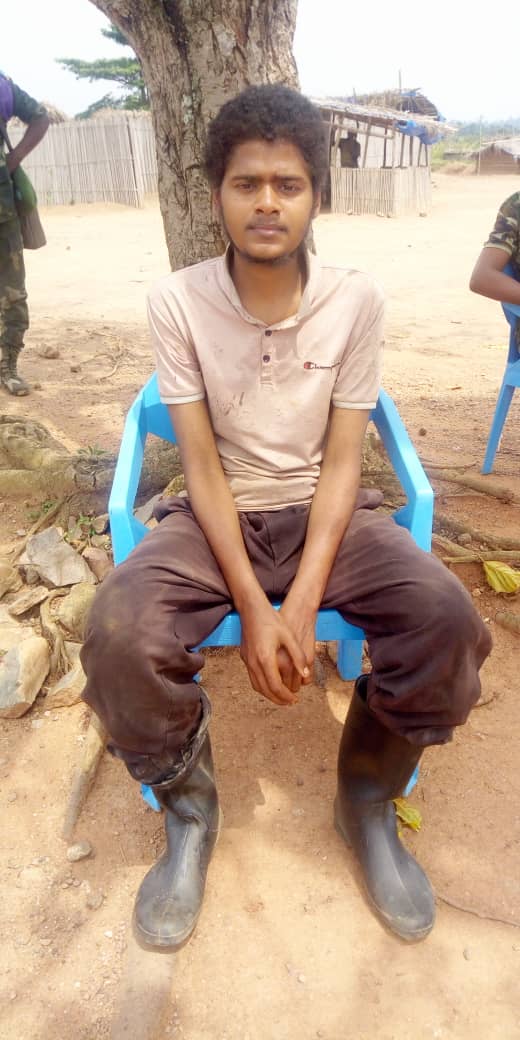
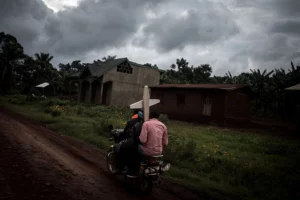
Security agencies in the Democratic Republic of Congo arrested one of Kenya’s most wanted terrorists known for slaughtering Christians Saturday after he was captured by local youngsters, according to reports.

With the Kenyan government offering an $88,000 bounty, Rashid Mohamed Salim was captured by youths while he and two associates were going to South Africa, where he wanted to start a new life, the Kenyan news website Citizen Digital reported

Salim, who is university educated, is also known as Chotara and Turki Salim. He was put on the Kenyan Anti-Terror Police radar last November on terrorism charges.

The youngsters handed over Salim to security forces, the persecution watchdog International Christian Concern stated.

“This young man is a great terrorist. He is a very big player in the activities of slaughtering Christians in this part of Beni (Congo),” a source in Beni told the Maryland-based ICC.
“We have been receiving pictures and short films of him cutting the throats of Christians and the police,” the source added. “It is said that he is the one who captures them or has them captured via his telephone by fellow rebels when he is in the process of acting and publishes them as propaganda. He is already an Allied Democratic Forces commander.”

The Islamist rebel group Allied Democratic Forces, based in Uganda, has carried out attacks on civilians and clashed with security forces in Congo’s Nord Kivu and Ituri provinces in recent years, killing hundreds and displacing tens of thousands of people. Those provinces have been under a “state of siege,” according to Amnesty International.  Congo and Uganda launched a joint operation against ADF on Nov. 30. 

As security forces have been unable to prevent Allied Democratic Forces attacks, Uganda announced last month that its soldiers will stay in the DRC for as long as needed to defeat the terrorist group. Since his arrest, videos have emerged of Salim explaining his motivations for carrying out deadly attacks, according to ICC. When speaking of a video showing him beheading a DRC officer, he was quoted as saying that he had been given a machete by the ADF to “behead the government’s soldier that we had captured.”

“They told me to draw attention to all the people of the world that there was Islam in Congo, and they were invited to come and spread the Islamic religion so that Islam can rule the whole world,” he said, according to ICC. “So, I killed the FARDC soldier in the name of Allah.”

ICC reports that Salim was radicalized as a teen at a popular Mosque in Mombasa, Kenya, and is believed to have recruited youth into terror groups in East Africa. He was also believed to have joined the Islamic State insurgency in Mozambique.

It is unclear if Congo will extradite Salim to Kenya.

Salim’s father, Mohamed Rashid, told journalists on Sunday that he had not seen his son since 2020, and the family had no idea of his son’s location. 

“Dealing with the pain of his disappearance was difficult because we did not know about his whereabouts,” Rashid was quoted as saying by Kenyans.co.

“This boy went to the best schools and he performed well. He is a humble boy who loved his religion. We don’t know what got into him until things got to the point where they are now.” He called for his son to be prosecuted in Kenya. 

“My plea to the government is to help bring him to Kenya,” the father said. “He should come to Mombasa so that I see him and check that he is OK then they can do their work. He should be sentenced here.”

Source: Christian Post
Read more

Persecution of Christians continues regardless of Human Rights Obligations in Kyrgyzstan

January 20, 2022 (International Christian Concern) – Forum 18 recently released a religious freedom survey outlining Kyrgyzstan’s human rights violations. Kyrgyzstan’s new constitution was approved on 11 April 2021, to the detriment of Christians’ individual freedoms. Several of the provisions in this new constitution directly violate human rights standards. Human Rights Watch published its World Report this month and found an overall decline Kyrgyzstan’s human rights record since the constitution was adopted.

Assembly is illegal if the message is not in line with the values of the “people of Kyrgyzstan”. The government has also pushed to quickly change 356 laws that further limit the freedoms of the people. There has not been enough time to properly analyze what effect the law changes will have on the Christian population. Kyrgyzstan’s new Religion Law, pushed through in late 2021, is perhaps most worrisome for Christians. This law will heavily burden religious freedom if adopted in its current state. It requires state permission for congregations to exist and assemble. Additionally, 200 adult members are required to make a congregation official, while smaller congregations are not considered and thus not granted state approval. This was not an issue before since those sympathetic to the plight of the church could be counted among the 200 without actually being members. However, with the new regulations, each member must be a founding member and provide the state with their full name, date of birth, citizenship, place of residence, and passport. Additionally, congregations will not be allowed to register if they do not own a building to meet.

These are only a few measures that will make the lives of the Christians in Kyrgyzstan more difficult and dangerous. The state disregards human rights and cracks down on what they consider “a threat to social stability, interfaith harmony, and public order”. In actuality, Christians cannot meet or worship because of the measures Kyrgyzstan will implement.

For interviews, please contact: press@persecution.org

Source: INTERNATIONAL CHRISTIAN CONCERN

Read more

A Pakistani Missionary shot dead in an attack after a Sunday Church service; Mourners chant “long live Jesus Christ”

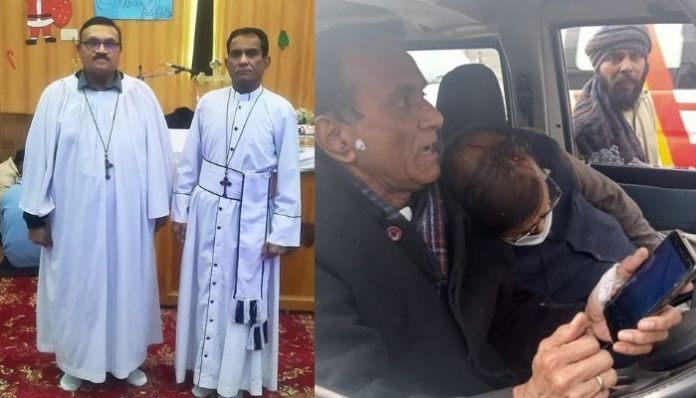
In what police called a “terrorist act,” two unidentified men followed a pastor returning home in his car after a Sunday worship service and shot him to death in Pakistan’s northwestern city of Peshawar, which in 2013 was the scene of one of the deadliest attacks on Christians in the country.

The pastor, identified as 75-year-old William Siraj of Shaheed-e-All Saints Church from the Church of Pakistan denomination comprising Methodist and Anglican churches, was shot twice in the abdomen as he and his colleague, identified as Pastor Patrick Naeem, were driving home from church on Sunday.

The shooting occurred near Ring Road in the city’s Gulbahar area, leaving Pastor Siraj dead and Pastor Naeem injured, Pakistan’s Dawn newspaper reported, adding that Naeem had been discharged from the hospital where he was treated for minor injuries. Pastor Siraj’s body had been handed over to his family.

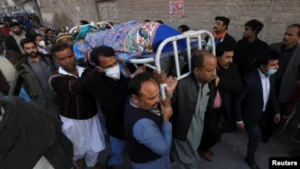
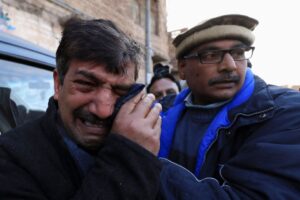
News channels showed emergency services removing the pastor from the car as people chanted “Long live Jesus Christ” while carrying his body on a bed through the streets to a house, according to Reuters.

“We demand justice and protection of Christians from the Government of Pakistan,” tweeted Bishop Azad Marshall from the Church of Pakistan.

Archbishop of Canterbury Justin Welby also responded to the news of the attack. “… We pray for the light of Christ’s justice, hope and peace for our sisters and brothers in the Church of Pakistan,” he wrote on Twitter.


Capital City Police Officer Abbas Ahsan called it a “terror attack” and said, “We are determined to protect minorities.” Khyber Pakhtunkhwa province’s Chief Minister Mahmood Khan offered his condolences to the Christian community and the family of the deceased. 

On Saturday, Pakistan’s interior minister Sheikh Rasheed Ahmed warned of possible terrorist strikes across the country over the next two months as security agencies had learned about sleeper cells of militant outfits in that region, The Times of India reported.

No one had claimed responsibility for the shooting as of Monday. The country’s northwestern areas bordering Afghanistan have seen a rise in militant attacks on security forces in recent days, many of them claimed by Tehreek-e-Taliban Pakistan, which is close to the Afghan Taliban, Reuters said.

In 2013, at least 81 Christians were killed after two suicide bombers blew themselves up at a church belonging to the Church of Pakistan denomination in Peshawar as hundreds of worshipers were leaving Sunday mass.

About 400 worshipers were exchanging greetings after the service at the 130-year-old All Saints Church when the two bombers, each carrying about 13 pounds of explosives, launched the attack. The walls were pockmarked with ball bearings that had been packed into the bombs to cause maximum carnage in the busy church.

There are about 70,000 Christians in Peshawar. The community accounts for about 2% of the 180 million people in Pakistan.

Muslim minorities, including Shias and Ahmaddiyas, also often face attacks by Sunni terror groups in Pakistan.

Source: Christian Post

Read more

Former Miss Mississippi confirms the murder of her husband while on missionary work in Alabama

Last week, the husband of former Miss Mississippi was fatally shot in front of his 2-year-old child while sharing the gospel with people in Montgomery, Alabama.

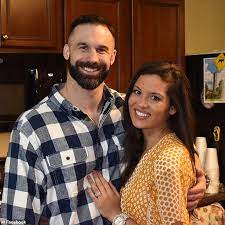
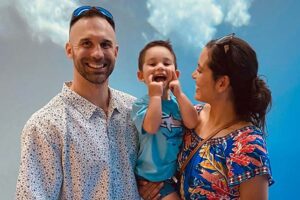
Thomas Hand Jr. (37) and Christine Kozlowski Hand (33) were married in 2016 and have a son, Roman (2). The couple announce they that were expecting their second child together two days before Thomas was shot and killed. Hand also has a child and stepchild from a previous marriage.

It has been reported that Kevin Rayan, a family friend, said that Hand was standing alongside his wife and son and sharing the gospel with a family in a poor neighborhood when a mumbling, shirtless, 17-year-old male walked up to Hand and shot him.

Police say Hand was pronounced dead at the scene, and they have arrested and charged the gunman, Jerimiah Walker, with capital murder. The incident took place on January 22, 2022 around 4:30 PM on the 3100 block of Texas Street in Montgomery, Alabama.

Hand was known as someone who loved fitness and had competed as a bodybuilder. He found God in 2018, loved to study the Bible, and would frequently share the gospel with others in low-income areas in Alabama on Saturdays. He hoped that one day he’d become a preacher.

The family had just moved to Alabama from New Orleans to escape the violence that was growing in their Louisiana suburb.

Christine told Dailymail.com, “What you said is true. It was a complete random act of violence.” She also posted on her Facebook page thanking everyone for their thoughts and prayers.

“Thank you for all of the thoughts and prayers during this time of the passing of my husband Tommy Hand,” Christine wrote. “I feel the love and support from everyone and just wanted to let everyone know that indeed Tommy was shot and killed last night on Texas Street in Montgomery, AL. I appreciate and welcome all of the messages, I’m just overwhelmed with all the questions and retelling of the details of what happened. I will at [a] later date release more information to explain everything to everyone.”

Christine’s sister, Danielle Kozlowski, posted on Facebook that she set up a GoFundMe page for those who wanted to help. The funds collected will go into a savings account for Hand’s son and unborn child.

“The funds raised by this account will go toward helping pay for my nephew Roman and the baby’s future expenses,” the page reads. “Any and all funds donated will be appreciated during this tough time for the Hand family. My sister Christine Kozlowski Hand will be the beneficiary for this account.”

Over $39,000 had been raised at the time this article was published. “The Hand Family, as well as The Kozlowski Family thank you all tremendously for the amount of love and support that everyone has shown,” Kozlowski wrote.

Source: Church Leader

Read more

Country singer and actress Jana Kramer celebrates her new birth in Christ publicly and testifies of her healing

Country music singer and actress Jana Kramer makes her faith public, shares her baptism moment, and testifies how she found healing in Jesus.

Jana Kramer Finds Healing In Jesus

In an Instagram post that Jana Kramer shared, she wrote, “I don’t have the words yet…I will…but for now… ‘In the name of Jesus, there is healing,’”

Baptism Video

She also shared a separate post of an emotional video during her baptism following the post. She said, “This is my battle cry. This is the day I stopped walking alone.”

The actress then remarked how she was indeed never alone in life because of God.

“He was always walking with me…I just didn’t think I deserved that,” Jana wrote. “If I’m honest I didn’t know how to trust it or if I could trust it at all. Looking up to a “father figure” with my past was hard to believe or have comfort in. I didn’t think he would stay. That he wouldn’t hurt me. So I pushed God away for years.”

She also added that her “brokenness and quite moments alone” made her realize she wasn’t truly alone. Because God never left her, and He was always there.

Jana Kramer

Photo Courtesy | Instagram – @kramergirl

“God was just waiting for me to come to him,” she added. “And I have…and today I made my faith public, and it feels really good to know no matter what happens next on this journey of life, HE is next to me walking with me. God is walking with you too through all the good and bad times, so let HIM in. I hope this encourages someone to take that next step because you aren’t alone… “In the name of Jesus there is healing.”

Finally, Jana quoted Lamentations 3:22-23 in the Bible: “The faithful love of the Lord never ends! His mercies never cease. Great is his faithfulness; his mercies begin afresh each morning.”


Many Christian celebrities and fans commended her decision to follow Jesus.

“Praise the Lord,” actress Candace Cameron Bure commented. “And all the angels sang in Heaven and rejoiced! Praise His holy name!! A step in faith reaps eternal reward.”

Source: GOD TV

 
Read more

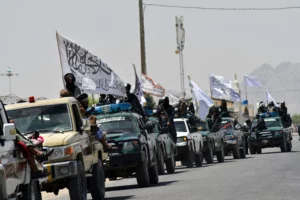
Why is Afghanistan the most dangerous place for Christians in 2022?

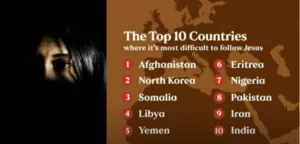
It’s the most seismic shift in 20 years of the Open Doors’ World Watch List: Afghanistan has taken over as No. 1 on the list.

North Korea has been No. 1 for 20 years, so why aren’t they at the top again? Have things gotten better in North Korea? Sadly, the answer is “no.” North Korea has lost the top spot, not because their level of persecution against Christians has gone down. It’s actually gone up.

North Korea is only No. 2 because the level of persecution against Christians in Afghanistan has drastically shot up, particularly after the Taliban took over the country’s leadership in August 2021.

To shed more light on why Afghanistan is listed at No. 1 on the 2022 World Watch List, we asked one of our frontline partners, Hana*, to share with us. Hana is on the ground in the region that includes Afgahnistan—she sees and lives the persecution of Christians firsthand, every day.

What can you say about the history and current state of the church in Afghanistan?  

[For security reasons,] I can’t really say much except for the fact that in the last 50 years, there’s been hostility towards a Christian presence in the country; Christians are not considered to be a legitimate presence in Afghanistan. They are not welcome, nor are they given shelter or care. There was hostility to the faith prior to the Taliban.

How are Christians in Afghanistan vulnerable and targeted?

Basically, they are vulnerable because if they are found out to be believers, then immediately they are considered traitors, enemies of the state, enemies of their tribe and community. Punishment for that is death. That’s the overarching reality.

In September, certain lists had gone around about who believers could be, especially in areas within the country where many were foreign-educated. Those lists became available to the Taliban somehow, and these [Christians] are the ones who are being hunted down.

Believers are also vulnerable because they are absolutely hated; with the current situation, they can’t get medical care, they can’t go shopping, they can’t even go and have a baby under normal conditions. In a country like Afghanistan, medical care is paid for by a religious tax, and once people learn someone has turned away from Islam, then they have no right to access that service.

Believers in Afghanistan are being hunted and their names are known to the Taliban. This is a fact.

Why do some Christians stay in the country and others flee? What was the tipping point when some Christians decided they needed to leave?

The tipping point for leaving is family; the tipping point for staying is commitment. We’ve seen it with the Christians we’re in contact with. For those who are leaving, they want to be reunited with their family who have also left, or to protect their children. Those who are choosing to stay specifically say they’re staying because of the work God began.

What particular challenges do Christian refugees face?  

Displacement from their families. Clans in Afghanistan are used to traveling together; if they’re not nomadic, they’re used to staying and operating in a space. To be in an environment completely alien to them is an absolute challenge.

Second is language, and third is healthcare. Many of the refugees are in critical healthcare situations and in need of nourishment and warmth. They need shelter. Refugees are already displaced from their environment, but for Christian refugees, they have also lost their networks. They lost their trusted networks of people they can share their faith with.

What challenges do Afghan Christians who stay behind face? What conditions do they face in their daily lives?

Christians who stayed behind can’t go out. At this moment, they’re in hiding.

When children go out, they could easily notice and tell others something like, “Our father doesn’t say this many prayers,” or, “We have a different book in the house.” Christians must live with caution. Towns are in lockdown because of the Taliban. The Taliban are shutting down communities to find people who are hostile to their cause. They lock down motorways and initiate blackouts.

Before, in the public sphere, believers could see each other. They may not have been able to pray in public spaces, but they could meet and go elsewhere. Now, with the new government, even those few, precious treasures have been taken away.

Why are Islamists so fearful of other faiths, particularly Christianity? 

They’re not fearful—they’re hostile. They don’t fear. The only thing they fear is war and sanctions. They don’t fear us; they hate us. They recognize Christ in us, the hope of glory. They would say they don’t hate Jesus, because He’s their prophet, but [as Christians] we don’t recognize Jesus as only a prophet; we recognize Him as the living God, and that’s against their teachings.

What do you see as the future for Afghanistan? Are you hopeful?

I’m very hopeful because the reason there are believers who stay is not because of the intervention of any human being—it’s the sole work of God and the Holy Spirit. No amount of human effort can work against the powers and principalities working here. You can take every airplane in the world and take out every believer from this country, but those remaining will still have dreams and visions. There will still be persecution, but God will continue growing His church.

What can we do to support and help vulnerable Christians in Afghanistan? 

The very first thing I will unflinchingly say is this: pray. Prayer is not an inactive, passive thing people think about; it’s what drives us to the next step because it leads us. Pray that Jesus would lead us to what to do, and that He would give us endurance. If they (local Muslims) pray five times a day, we need to be praying 24 hours a day.

It’s not fatalistic for me to say this: God loves the people of Afghanistan so much. Thank God for being God and for being sovereign in this country. Pray for the displaced who are separated from their families, pray for those whose dreams are being snatched from them and pray they would know God’s comfort.

Second is to be aware of the environment. It wasn’t an overnight thing that the U.S. just pulled out and then suddenly everything came to this. There were many factors; there were months—years—of preparation leading up to this. There have been a lot of materials produced and a lot of brainwashing of young minds. 

The Church around the world needs to recognize that the Taliban doesn’t just want to do this to Afghanistan, but they want to “save hearts and minds” of people worldwide. It’s actually the name of their booklet—it’s a manual that every Taliban person subscribes to. The Church needs to be aware.

In addition, the people who fled this country, thousands of them are not believers. The church in the West can use this time to introduce them to Jesus. They all need Jesus. So how Christians approach them—it matters. Form discipleship groups, introduce them to Jesus, but also protect the next generation from falling into Taliban ideology.

Let’s answer Hana’s call to action and pray without ceasing for our brothers and sisters in Afghanistan. Let’s pray for their families and friends, those who are now refugees on the run and those who have been displaced. And let’s not forget to pray for the Taliban, that God would miraculously change their hearts and fill them with a love only He can offer.

We pray this in Jesus’ powerful, life-giving name.

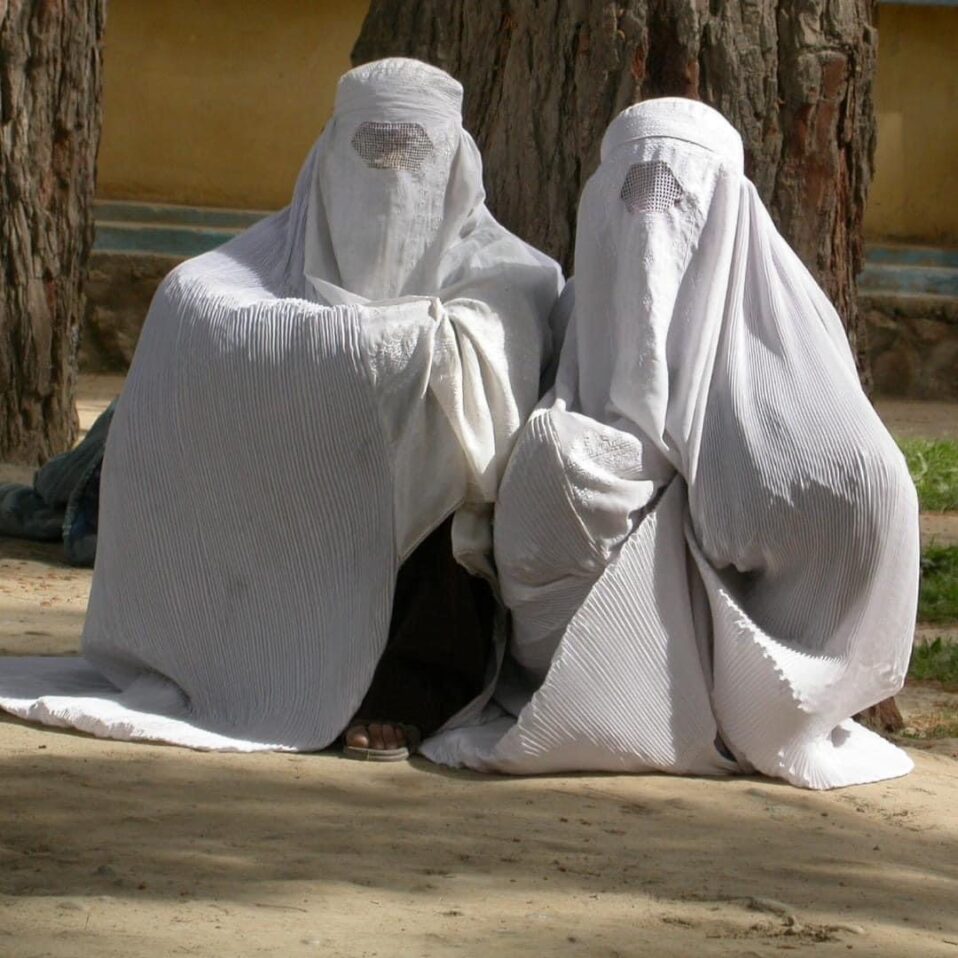
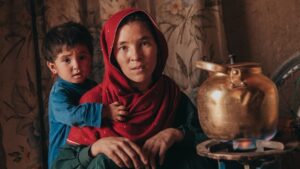
top image: Shutterstock; timsimages.uk: Women in burqas in Kabul, Afghanistan, walk with a child.

*name changed to protect identity

Source: Open Door 


Read more

Supreme Court reviews case of football Coach fired for praying after games

A football coach who led his team into prayer after games was fired by the school. And now the Supreme Court takes his case for review.

Commitment To Give Thanks To God

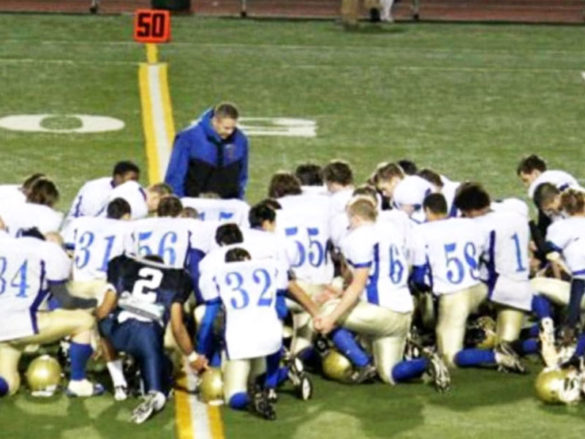
In 2008, Joe Kennedy, a retired U.S. Marine Corps sergeant, made his commitment to God to give thanks to Him after each game. Whether that would be a lose or win the game. After watching the Christian film “Facing The Giants,” he was inspired to do this.” Hence, in coaching his first game and the next games, he would always do so.

Football coach praying after games

Photo Courtesy | Faithpot

It all began with a compliment from a neighboring school administrator. Until his school, the Bremerton School District school administrator requested him to stop praying with his team in public. “My school district instructed me that I could pray as long as I was not leading my players in prayer,” the coach recalled. 

Football Coach Praying In Public Not Allowed

However, the school issued a new policy that said praying where others could see him was no longer allowed. For seven years, Coach Joe would walk toward the center of the field, kneel, and pray after each game. But because of the new policy, he had to stop that.

Photo Courtesy | Faithpot

Then Joe said, “Just hours before what would be my last game as coach, the school district gave me an ultimatum: If I prayed after that night’s game, they would suspend me. As a proudly retired U.S. Marine, something inside me stirred. I would have given my life defending the religious freedom of any American. And yet that very right was denied to me. That just seemed wrong and unjust.”

Fired From Work

At first, the school suspended him. But soon, the Washington state school district fired him for violating the school policy.

Football coach

“It was because the school district that hired me—Bremerton School District. Just across the Puget Sound from Seattle—forced me to choose between my faith and my job,” he told Fox News in an interview.

Following the termination, Joe filed a case against the school. He fights to “vindicate my [his] rights of free speech and free exercise of my religious beliefs.”

And now, the case has finally reached the Supreme Court for review after declining to hear his case in 2019. It would be a long process, but the former football coach will continue to fight.

“Why keep fighting this? Why not move on? My answer is simple: quitting would violate everything I tried to teach my players,” he said.

“That isn’t to say this has been an easy road. There are days when I want to give up and move on with my life. There are days when I don’t think I can keep fighting this fight. But that’s when I remember the hundreds of times I told my players not quit no matter the challenge!”

Further, Joe added, “I also think of the thousands of other public school coaches and teachers whose inalienable right to freely exercise their faith in public is at risk. If the court decisions against me are allowed to stand.”

In an interview with King 5 News, Joe remarked on the bottom line of his fight. He said, “I made a commitment with God that, hey, I’m gonna give you the glory after every game. I’m not gonna hide who I am. I’m not gonna hide my faith.”

Source: GOD TV

Read more

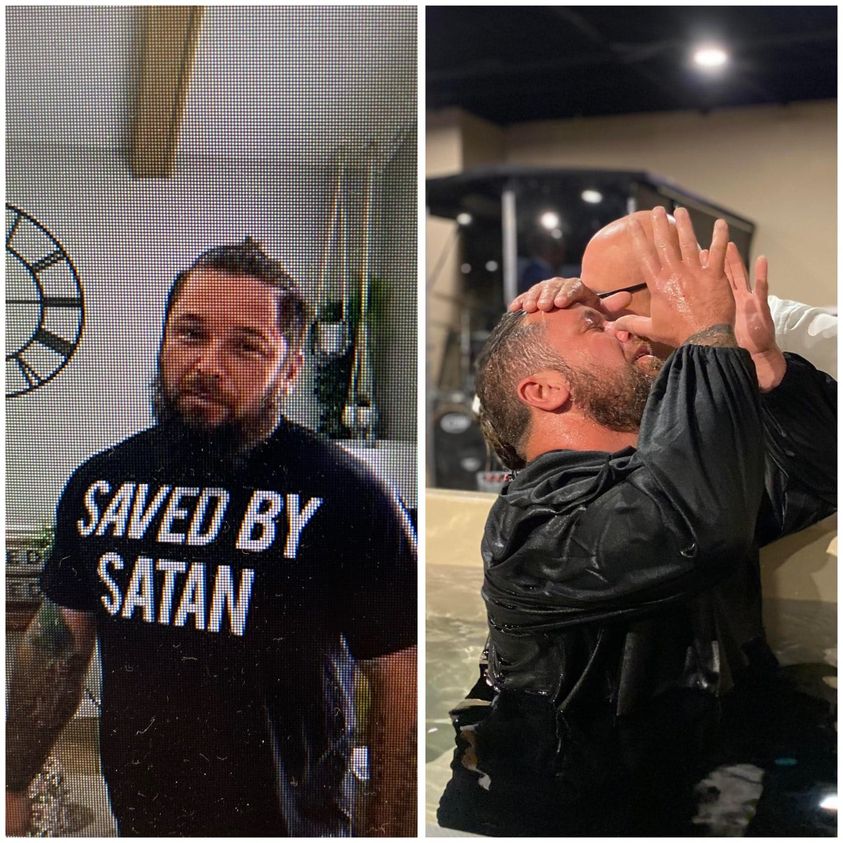
A Satanist and an Atheist changes his confession from “Saved by Satan to Saved by Jesus”

A few months ago, Carl Sartor would have described himself as someone who hated God, but today the 35-year-old says he wants everyone to experience God’s love. 

Carl’s story of salvation is going viral on social media.

This image has more than 325,000 views on Facebook. 

Carl gave his life to Christ at Cross Church in Parkersburg, West Virginia, in November. 

The former meth addict told CBN News he had been running from God since age 5. 

“I’ve always had this emptiness in my life,” he said. “No matter what religion I followed, I always believed that when you died, you were dead. That was it. You were in the ground.” 

Carl shared he was an atheist for 15 years and a Satanist for five years.


“I would argue you tooth and nail that He did not exist. I was living in a vicious cycle of drugs and alcohol. I had a severe anger problem. I blamed everyone and everything,” he wrote in a Facebook post. “I also blamed God.”

Carl said it wasn’t until he hit rock bottom in 2021 that he began to have an open mind about Jesus. 

“I couldn’t stand who I was and what was going on in my life,” he explained. “I tried to commit suicide.”

Carl decided then to try Cross Church where Minister Rich Walters had invited him more than a year ago.

“He said, ‘I’d love to have you for service.’ I said, ‘I walk a different path, buddy. You’d never catch me there. It will be a cold day in hell before you see me in church.'”

But it was that invitation, a word of knowledge about Carl’s life, and a message on forgiveness that led Carl to let go of hate and give his life to Christ. 

“We didn’t even get to the preaching yet because we were still singing, praising, and worshipping. We didn’t even make it 15 minutes in that service before he ran to that baptismal tank,” Walters wrote on Facebook

“Today, he’s a worshipper. Today, he’s a believer. Today, he’s my brother in Christ. It’s like the old song says…’There’s just no telling what you’re gonna do, in that moment Jesus gets a hold of you!!!!’ Praise God!!!” he added.

“I feel completely whole. I feel at peace with myself. There is no longer a void,” Carl told CBN News. “Everything has changed about me.”

It is a life-changing experience that Santor wants everyone to have.

“I’m spiritually alive now and that happened when He wrapped His arms around me…and I felt that love,” he explained.

“God is real and I will continue to walk this path with Him beside me. By His grace, I’m by far the best version of me I have ever been,” Carl wrote on Facebook. “My God is an awesome God and I pray that everyone gets to experience His love as I have.”

Source: CBN NEWS

Read more

Taking Kids to “Sunday School” matters more than the “Right School”, Research Suggests

Public health expert Tyler VanderWeele, who coauthored the cover story for our November print issue, recently analyzed how four school categories—public, private, religious, and homeschool—might affect the long-term well-being of adolescents.

VanderWeele and his team at Harvard examined a large swath of data, collected over more than a decade, which tracked the development of 12,000 nurses’ children into their young adulthood. The longitudinal study surveyed social, physical, and mental health trends across the group—like substance abuse, anxiety/depression, community engagement, and sexual activity.

The team’s analysis was published recently in PLoS ONE, and some of their findings were surprising.

In comparing key health indicators, the researchers found little difference between the long-term well-being of adolescents who attended public school and those who went to private school. (All of the kids who participated were between the ages of 9-14 when the study began.)

“We didn’t go in having any clear expectations, but we certainly didn’t expect to find basically nothing—which is what we found,” VanderWeele said. “We found relatively little difference comparing public and private schools across a whole host of outcomes.”

There was, however, a noted difference between the kids who attended public school and those who were homeschooled.

“We found a lot of positive, beneficial outcomes of homeschooling,” VanderWeele said.

Their data showed that homeschooled kids were more likely to volunteer, forgive others, possess a sense of mission and purpose, and have notably fewer lifetime sexual partners.

Homeschoolers were also 51 percent more likely to frequently attend religious services into their young adulthood. “It is quite possible that a lot of homeschooling parents were religious or did this for religious reasons, but we unfortunately don’t have data on the content of the curriculum,” VanderWeele said.

The researchers found only one adverse effect of homeschooling: those children were 23 percent less likely to attain a college degree than public and private school kids (who had similar college completion rates in this sample). “This may point to the need [to] focus more on college preparedness,” VanderWeele commented.

Another surprise was how the public-school experience compared to private religious education. In the long list of health metrics, the team found only a marginal difference on a few outcomes—around 10–15 percent—between the kids who were sent to public school and those who attended schools with faith affiliations.

The kids who went to religious schools were marginally more likely to register to vote, less likely to be obese, and more likely to have fewer lifetime sexual partners by the time they became young adults.

On the other hand, they were slightly more likely to engage in binge drinking.

“It might be that some children feel they want to rebel if they’re going through religious schooling all of their life,” VanderWeele said. “We weren’t really able to determine why, but something like that could be the explanation.”

In adulthood church attendance, homeschooled students also came out ahead of others. The kids who went to faith-based schools were only slightly more likely to attend religious services as young adults than those who went to either secular private or public schools—and much less likely than those who were homeschooled. (Worth noting: The study did not look at faith retention among Christian students, only religious attendance among the whole group.)

Demographer Lyman Stone cautions not to interpret the results of this single study as proving a definitive causal link—to say, for instance, that homeschooling or religious schooling alone are direct causes of higher religious attendance—but to recognize that this data set is related by association.

“The link between religious schooling and adult religious service attendance—and probably homeschooling too—is causal. This study doesn’t show that it’s causal, but it is. And we know that from other studies,” Stone says, referencing older research that analyzed Catholic education in France and Islamic education.

“The environment that a child is exposed to does cause changes in their adult religious behaviors,” Stone says, and “the results [of this study] are consistent with that.”

Yet the differences between public and religious schools were much less than VanderWeele expected, based on trends he’d discovered in previous research using the same data set.

“Our prior work had indicated that religious service attendance during adolescence was really important and shaped health and well-being in all sorts of ways,” VanderWeele said. That conclusion still holds. “But the effects were much smaller with religious schooling, which was not exactly what we expected.”

“What we found was that religious service attendance makes a bigger difference than religious schooling,” he said. “Religious service attendance has beneficial effects across the different school types and has stronger effects than religious schooling.”

In other words, the kids who grew up attending church regularly rated far higher in overall well-being as young adults than those who went to a religious school but did not go to religious services during their formative years.

And while “the effect of religious schooling itself did not seem to dramatically differ comparing those who attended religious services versus not,” Vanderweele explained, “for those who went to both, religious service attendance in youth was clearly the more dominant force in shaping health and well-being, at least as this pertains to the data and experiences 20 years ago.”

In previous studies, VanderWeele had discovered that weekly service attendance in adulthood was associated with “about 30 percent reductions in all-cause mortality, 30 percent reduction to the incidence of depression, [and] fivefold reductions in suicides.”

Furthermore, “regular service attendance helps shield children from the ‘big three’ dangers of adolescence: depression, substance abuse, and premature sexual activity,” VanderWeele writes in his latest article for Christianity Today. “People who attended church as children are also more likely to grow up happy, to be forgiving, to have a sense of mission and purpose, and to volunteer.”

“So regardless of school type,” VanderWeele says, “it’s beneficial to go to religious services, both as an adolescent and as an adult.”

Source: Christianity Today

Read more

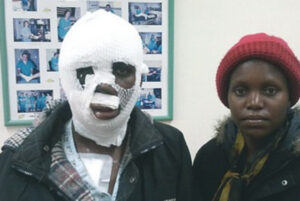
A converted Mosque Leader to a Missionary in Uganda violently attacked by his Muslim relatives

A Christian pastor in eastern Uganda sustained serious injuries after he was beaten by Muslim relatives and accused of being a disgrace to the family. 

Bashir Sengendo, a former mosque leader, returned home on Jan. 12  to visit his family in the Namutimba District. It was his first visit since leaving in 2016, Morning Star News reports.

“This request continued for the last six years, but I had been reluctant to go back home,” Sengendo told Morning Star News. “I was shocked to receive a cold reception and slept without food, only to be attacked and beaten badly in the morning by my brother and my uncle. They cut me with an object in the head, back and hand.”

During the attack, police and neighbors heard Sengendo screaming and came to his rescue. 

“As the attackers were hitting me, my uncle said that the family spent a lot of money training me as a Muslim teacher and that I have caused a lot of shame to the family and Muslims at large,” Sengendo said.

The pastor was badly wounded and taken to a local hospital. Doctors assessed him for blood loss and deemed him critically ill, according to Morning Star News.

Sengendo converted to Christianity in May 2016. He spent six months attending a Bible college, then became a pastor.

As CBN News has reported, the assault on Sengendo is just the latest incident of persecution against Christians in Uganda. 

Muslim extremists killed a 58-year-old Christian pastor in October after he refused to close his church which was located near their mosque. Pastor Stephen Lugwire of Bunangwe estate in the Namutumba District was violently attacked while tending to his sheep.

In another attack, a 19-year-old Christian was beaten and strangled to death by radical Muslims in eastern Uganda while with some of his friends in August. Dante Tambika, also known as Patrick, was murdered by five Muslim teenagers when he was fishing.

And a Christian man was hit in the head with a machete by his Muslim brother after he converted to Christianity in July.

Muslims make up only 14 percent of Uganda’s population with high concentrations in eastern areas of the country. Christians make up 82 percent. 

World Watch Monitor, a persecution watchdog, notes on their website, “A home-grown Islamist rebel movement has taken root in neighboring Democratic Republic of the Congo, which has emboldened Ugandan radicals to increase pressure on Christians.” 

Source: CBN NEWS

Read more